Friday, January 13, 2006

Oslo Day 5 - Home via the Palace


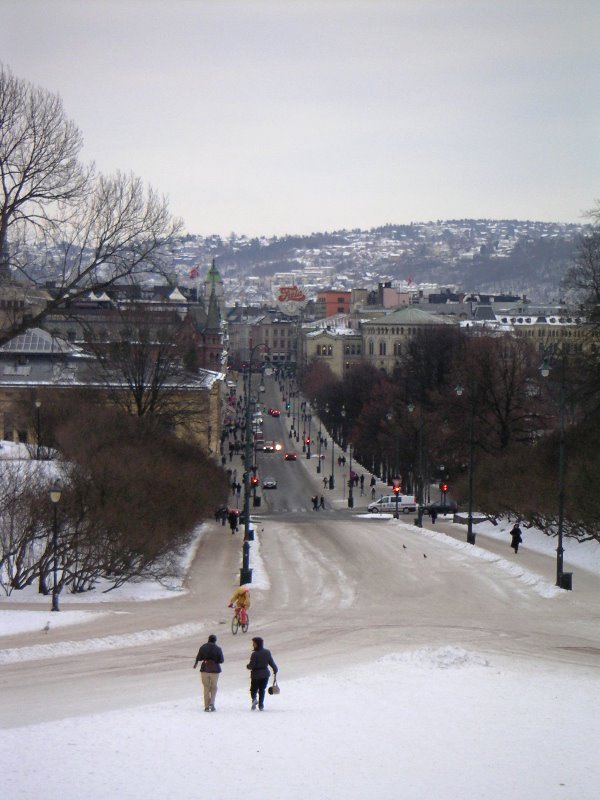
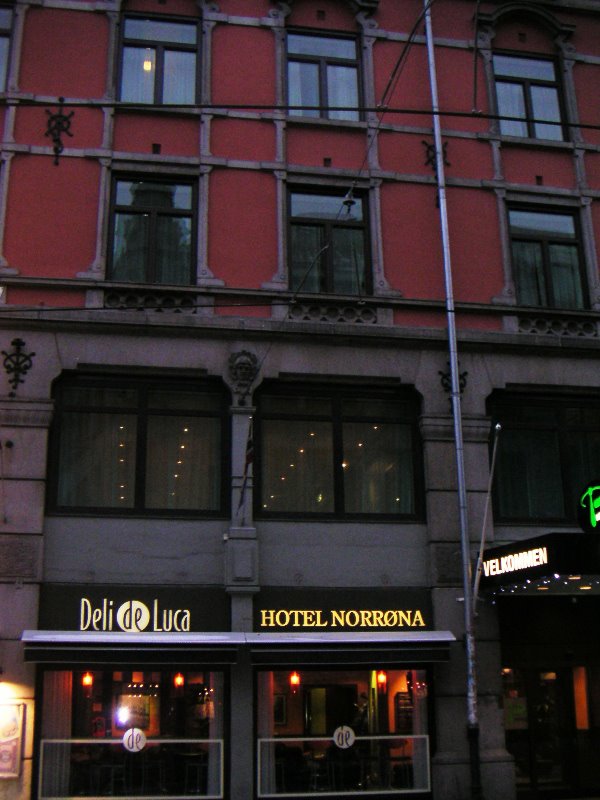
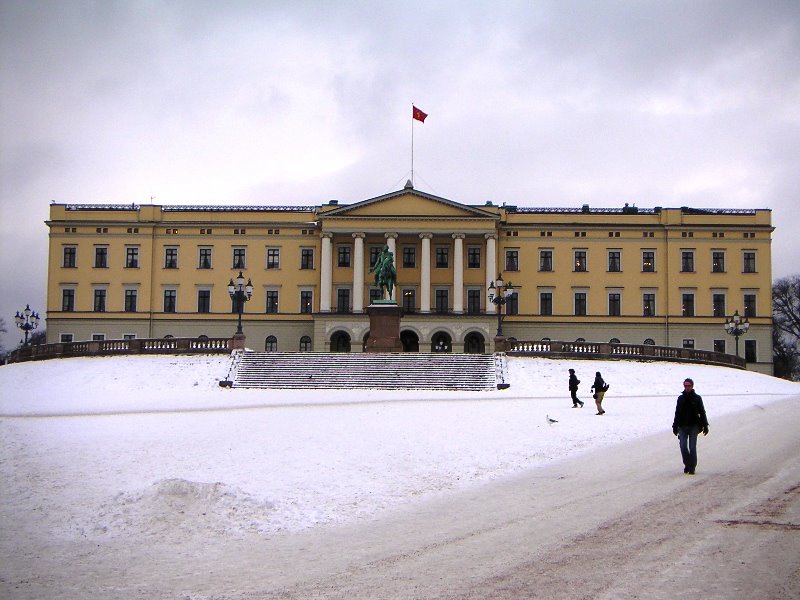
Morning dawned on our last day in Oslo. The temperature had risen to a balmy -2oC. Blondie was first up and went out shopping despite the hefty prices and came back with a shirt. By 11 we were packed and ready to go. We left the Hotel Norrøna and headed west to walk around the royal Palace. Unlike the UK were the monarchy are, for some reason, notable tourest attractions the Norweigian equivalents are much more down to earth. The palace is situated in the centre of it's own park at the end of the main street, Karl Johan's Gate. Unlike Buckingham Palace, you can walk right up to the Palace. It is still guarded by armed soldiers, but there is a much more relaxed atmosphere about the place. As we stood in front of the building watching a changing of guards, a door to the first floor balcony opened. Were we about to top off our visit with an appearence from a royal, perhaps even Harald V? Sadly not as it turned out to be a workman carrying a step ladder. Nevermind. We returned to the hotel, wandering past Oslo University, to have out final pølses before wandering back to through the station to the bus depot. It was now that we filled in our postcards and I ran back to the post office to get some stamps.
The system is very confusing because the post office doubles as a bank with different counters for each function. There was no evidence of any English instructions and all the counter staf simply ignored me as I approached. Then I twigged that there was a ticket system to determine wo was served hence the lack of attention. I pressed some random buttons on the front kiosk (again no English) and got my ticket.

The bus ride back to the airport was quicker due to a lack of extra stops. The daylight helped us see the Norweigian countryside and the snow - nearly all gone in central Oslo, was still here, as thick as ever. As the bus wound through the countryside we passed engineering works busy constructing a tunnel for the motorway that would end up being 5km long!
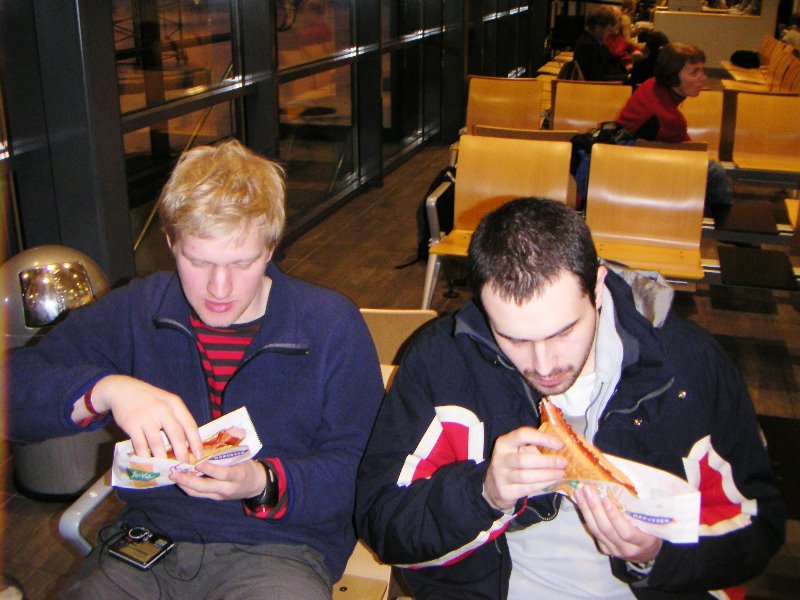
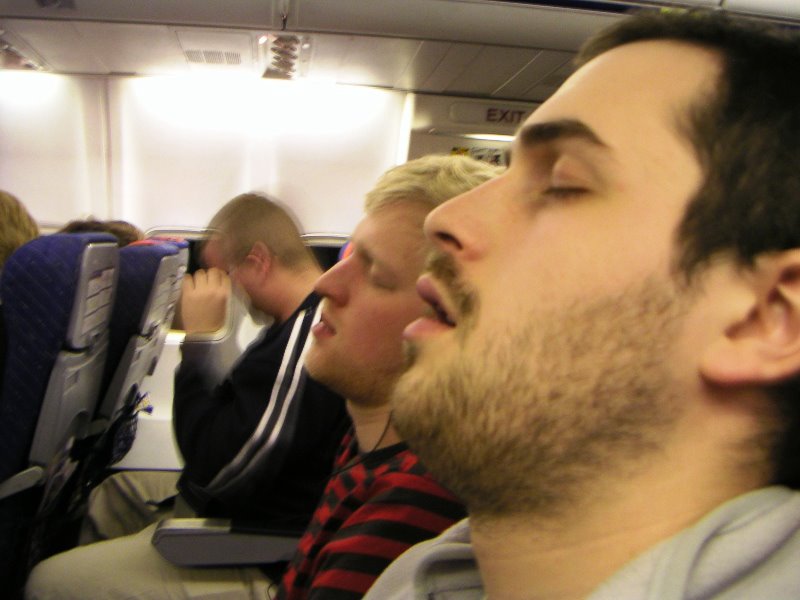
At the airport, there was a much larger presence of Ryanair passengers. Thankfully, most of them were going to London (well: Stanstead), so once again we were able to check in very quickly. We abandoned our attempts to sell our Oslo passes on (they were still valid for a further 2 days) as Torp Airport had absolutely no arrivals in the half hour we spent loitering in front of arrivals. After passing through passport control we had yet another final round of pølse and sat waiting for our flight. The duty free was surprisingly cheap given how expensive the bars had been, most spirits were only a few pounds over UK prices. Norway has a 25% VAT rate and the government taxes alcohol pretty hard to avoid the problems of excessive drinking - indeed, beers over 4.75% have to be sold in specially licenced shops. The flight back was hassle free (although the darkness and continuous low clouds made the window seat I aquired a touch pointless). The most interesting feature was that the plane was de-iced before takeoff to ensure that we didn't suffer ice on the leading edge of the wing.
Once again Ryanair demonstrated their cost-cutting determination by handing out the "complimentary" copies of their inflight magazine (November 2005 edition no less) before demanding them back as we approach the English coast. We arrived back in Newcastle on time. This time there was no hassle at customs - the "interview in progress" light was on indicating someone else was perhaps enduring a probing interview...Blondies car was still there (although why we parked at the far end of the massive car park I don't know) and we managed to avoid the tail end of rush hour to arrive back at Trevs - amazingly absolutely nothing had gone wrong: no flight delays, missed busses, hard to find hotels, money problems or even boredom.

On reflection, we all had a fantastic time. Oslo, although a small city, always felt open and friendly. Norweigians apparently have the highest quality of life and I ca see why. The honor system on the public transport is adhered to, the city is clean and free of pollution and the scenery is stunning. We set out with only 3 definite things to see: Holmenkollen, The Viking Ship Museum and the Vigeland Park, but found many other places, the best of which for me were the Peace Museum and the Mini Bottle Garery. The most appealing thing is that a return trip in the summer may needed - the city completely changes. Holmenkollen is awash with bright greens and vivid colours from the indiginous flowers and the ski-jump landing area becomes a 25m deep lake, Akker Brygge fills with people, sitting outside thr many bars and ferries regularly run across the bay and fjord. The temperature rises allowing the parks to be filled with sun-seakers and the sun can remain out until the early ours compared to the 4pm darkness we experienced. Almost like a completely different city. Oslo is definitely the type of place I would love to live: a big centre and filled with amenities as only a capital can be, but without the hustle-bustle and lonliness of somewhere like London. The thing we will miss most though? The underfloor heating in the bathroom - house 3 lacks any kind of heating in the bathroom...

Oslo Day 4 - Giant Statues and Miniature Bottles


Once again, we were slow to rise (leaving the bathroom with it's warm shower and underfloor heating made for some long showers). After the now familiar breakfast of an eclectic sub roll containing salami and cheese at one end turning to lettuce at the other via tomato and cucumber in the middle we set out on our last full day in Oslo. We later found out that the temperature was -12o but it didn't feel that cold.
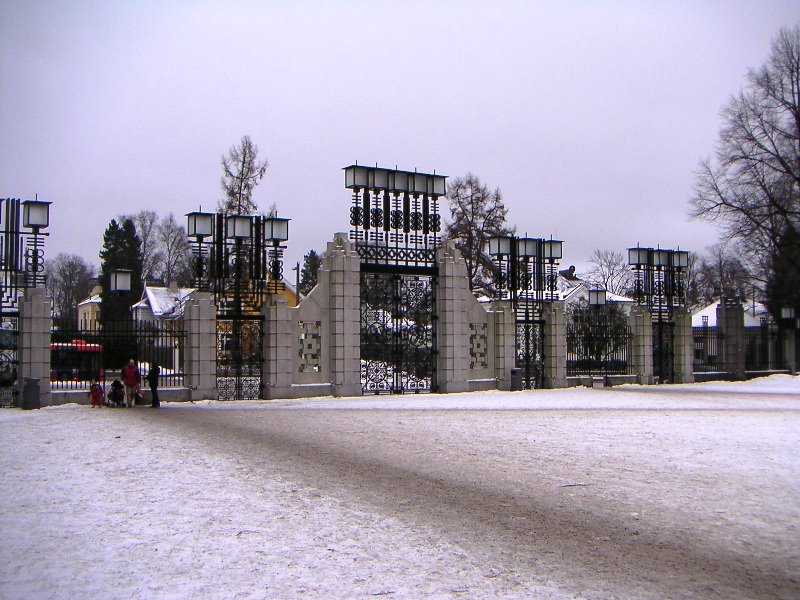
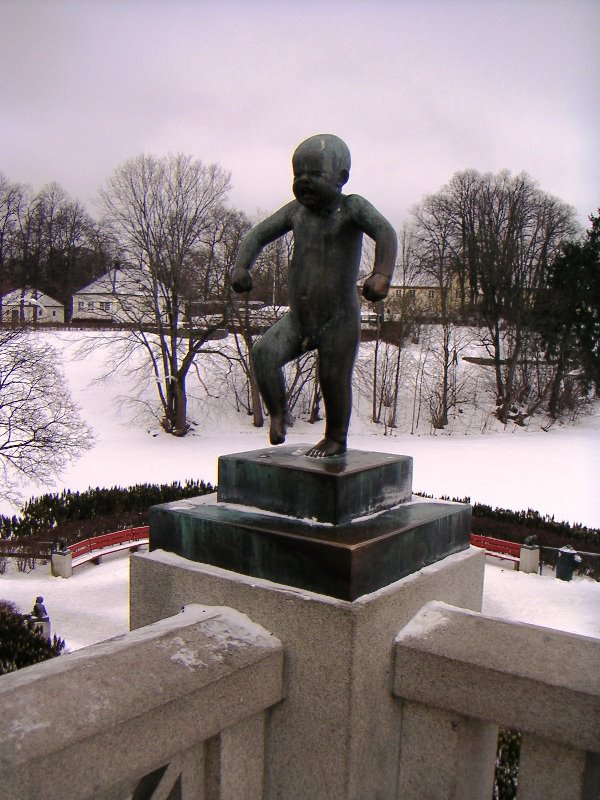
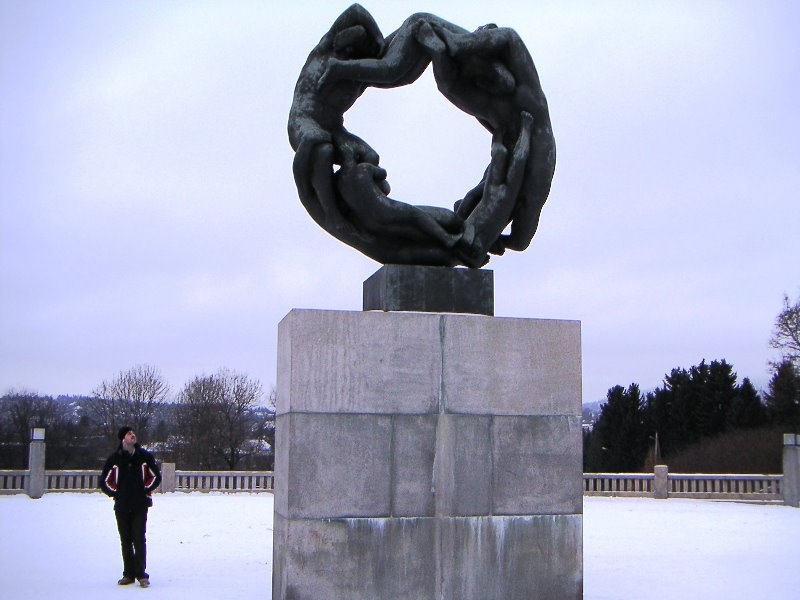
We headed to the west edge of the centre of town by tram to Frogner Park. The park contains a series of sculptures by Gustav Vigeland. From the ornate Vigeland-designed gates to the multiple sculptures that scatter the park it was very impressive, if a little bewildering. The 212 sculptures start on the sides of a bridge over the park's pond and are then followed by several large displays. The theme of the work is the relationships of man, all featuring men, women and children in different states. The bridge holds the famous Sinnataggen - a small angry child. Why it is famous I have no idea.
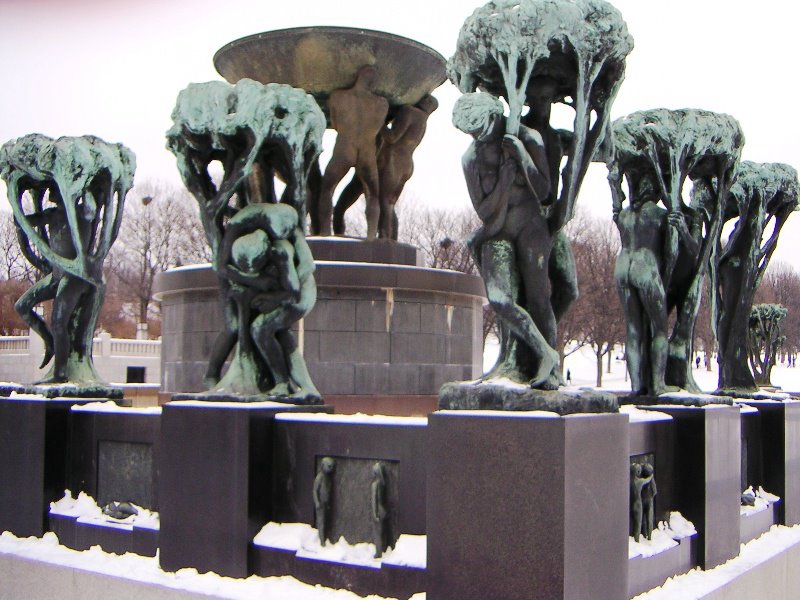
Following the bridge is the fountain. Sadly not working it left a giant dish held aloft by 4 giant men whilst at the bottom a surrounding series of carvings based around trees shows the path of man from cradle (a series of babies in a tree) to grave (a skeleton in the tree) in an unbroken cycle. There is suppose to be a mosaic on the floor, but due to the thick snow that still remained (even though we had had no fresh snow since we arrived) we couldn't see this. We passed several people out walking on skis and indeed several parts of the lake had frozen solid. My feet had got decidedly cold and holding my camera for more than a few minutes became very uncomfortable as my fingers lost all feeling - perhaps it was -12o...
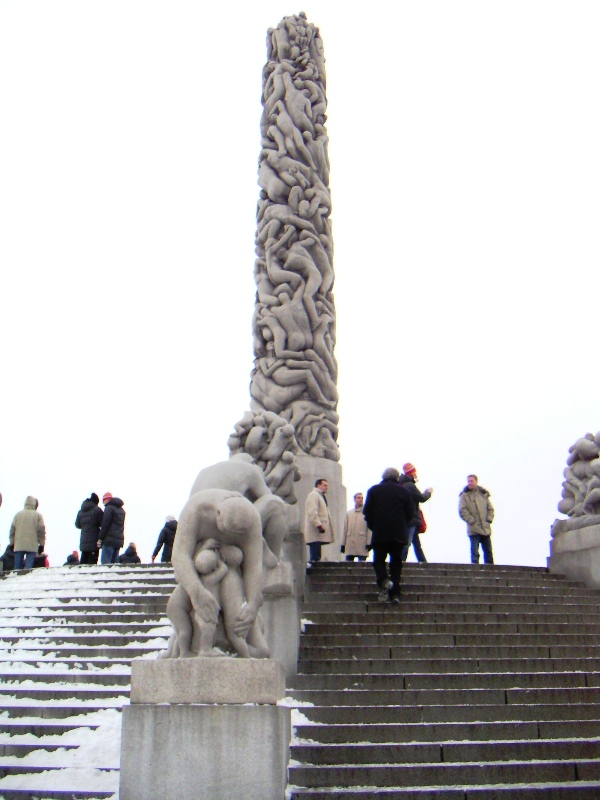
The bad thing about the snow was that steps hadn't been gritted, so ascending tot the next layout, the monolith, was made more tricky than it should have been. The monolith itself is the centre-piece of the park and took 3 stone carvers 14 years to complete and is carved from a single block of stone. At over 14m high it certainly impressive, but you can imagine the pressure on the carvers if after 13 years of work they had accidentally chipped off an eye or arm...
The area is surrounded by further scupltures which are frequently climbed on by children and tourists alike. The final major piece is the wheel of life, a circular piece summing up the overall theme - the cycle of life and the various emotions man encounters on the way and features man, woman and child holding each other so as to form a circle.

Vigeland himself struck a deal with the council. In return for building him a house and studio adjacent to the park and turning it into museum after his death, Vigeland would hand over all his works to the city upon his death. Several sculptures appear around Oslo. True to their word, Vigeland's studio is now a museum featuring further works and offering an insight into how he worked,completely unaided.
All his sculptures were created in clay and plaster before being turned over to stone carvers and bronze workers to produce the finished items. The museum features the original three part plaster version of the monolith and many other sculptures found in the park.

We returned to the centre of town and set off in search of the most random museum we had heard of - the Mini Bottle Gallery - a museum dedicated to miniature bottles.
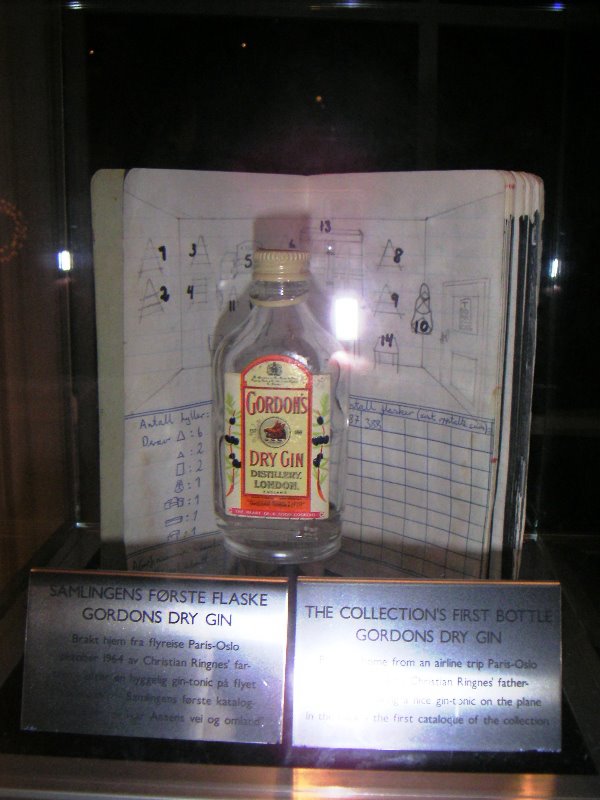
Unsurprisingly, this is the only museum of its kind in the world. As it was privately owned, our Oslo passes didn't work and we had to pay (much to Matt's chagrin). Once in, we were treated to one of the most wonderfully eccentric museums I've ever seen. As a child, the current director of Ringnes Brewery (one of Norways biggest) was brought a miniature bottle of gin(!) by his father as a present from a travel abroad. He soon started collecting these small bottles (defined as any vessel that holds drinkable liquid 50ml or less so perfume and sauce bottles were out).
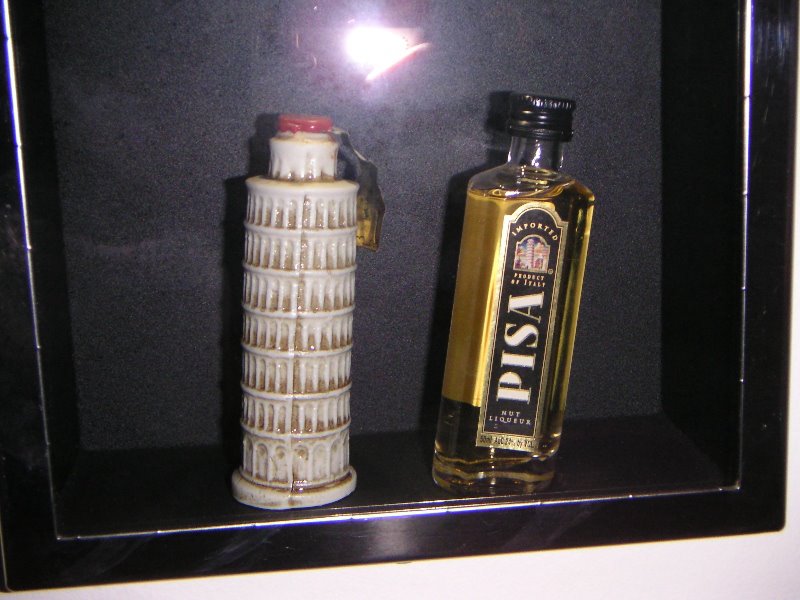
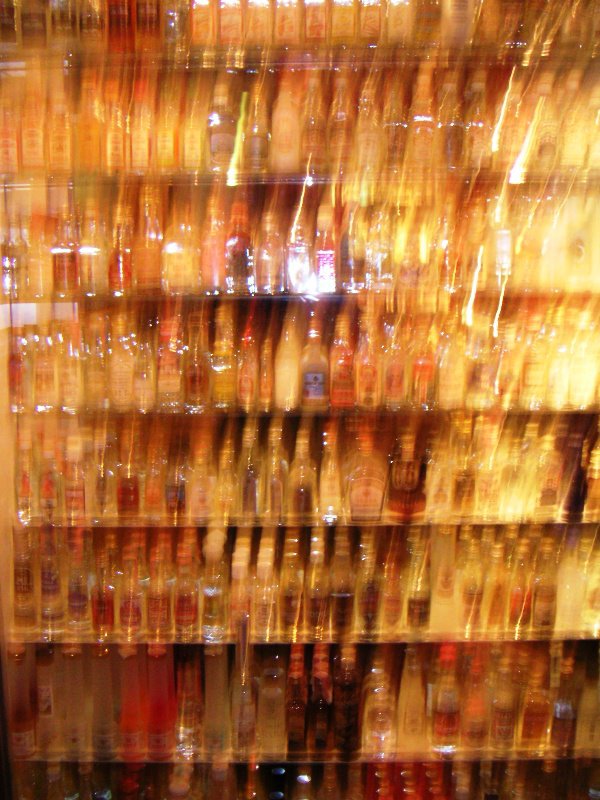
The museum boasts a collection of over 50,000 such bottles in all shapes if not sizes. From the obvious simple miniature spirits bottles to custom made, hand painted decorative items and even hotel specific bottles. Many of the more ornamental bottles are from Japan and Germany. We are greeted by a video showing Christian Ringnes introducing the museum. We see him attending miniature bottle meets in the US and the history of the gallery. After this it's a trip through some of the wackiest displays you'll ever have seen. Themed rooms include sports, famous people, fruit, animals and birds, the globe, the sin room (including for some reason a phallus hanging from a chain), music, the occult and even boasts the worlds most tightly knit miniature carpet with 11 million knots per square metre although quite how that is worked out I don't know.
We get a tour of different types of liquor and how they are made (including of course, just about every miniature associated with them), and the initially funny What is up a Scotsman's kilt (hint - it involves 3 bottles) that is triggered by walking through a beam on the floor. I didn't spot several miniatures that I have (not that I was looking) including a green absinthe and Skyy vodka. The museum doubles as a conference centre and the dining area features a chandelier made from mini Absolut bottles. Even the toilets were not without their quirks as the urinal was a gaping gargoyle's mouth flanked by personal "enlarging" mirrors (on both sides to cater for both left and right handers!) which was actually incredibly off-putting. It certainly is an incredibly unique place (the museum that is, not the toilet) and has a good sense of humour running through the whole thing.

We finally headed home. After the latenight antics of the locals last night (bars open until 4am), the city was deserted and most of the shops were closed, including our newsstand. I tracked down another for my pølse fix, but Blondie decided to embrace western capitalism and went to Burger King and paid the price as a large meal cost over £8! Since it was our last night, we decided to throw caution to the wind and head down to the modern tourist friendly, wallet unfriendly harbour area of Akker Brygge. Much to our surprise a lot of the restaurants were closed or not that expensive - we had heard stories of main courses costing £30 a go, but infact ours were about £15. The real kicker was the beer at NOK58 for 0.4l (about £5).
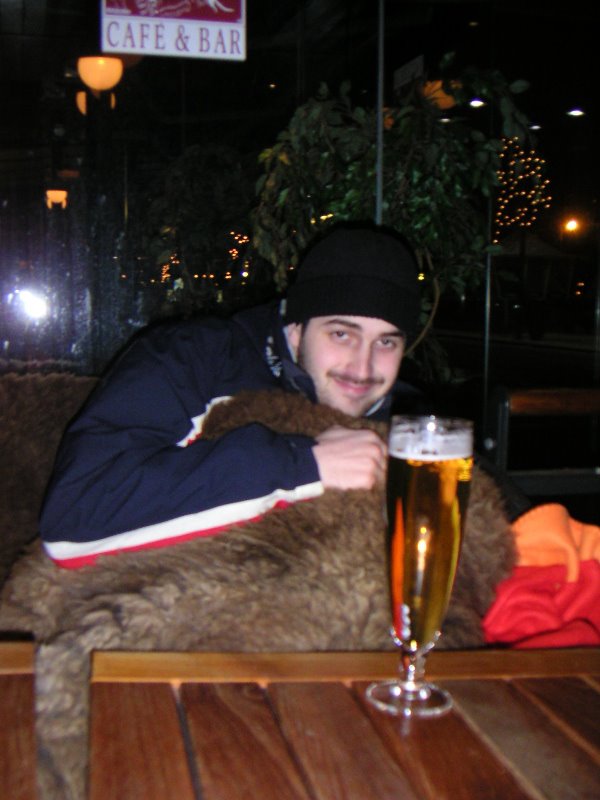
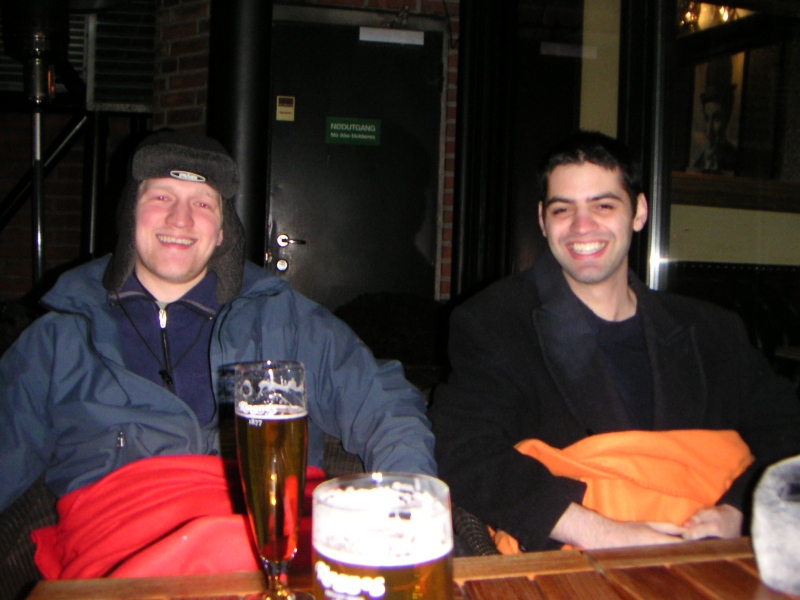
My selection was the odd combination of tagliatelle with deer (complete with gravy like coating) and winterberries. Despite looking like roadkill, it actually tasted excellent. Afterwards, we decided to embrace the cold and sit outsiderestaurantarant (albeit with furs, fleecy blankets and a heater) and watch the world go by. Of course, because it was a Sunday in the middle of winter only about 2 people went by, but it was still good.

We retired home to contemplate packing and our last day in this wonderful city. Remember, more photos are on my MSN space.

Thursday, January 12, 2006

Oslo Day 3 - Ships for Peace

Our discipline slipped a bit today and we didn't make it out of the hotel till 11am. Today we planned to go to the Viking Ship Museum across the harbor. During the summer months there is a bus-like ferry that shuttles between the main quaiside area and the peninsula, but what with it being winter, we had to rely on a bus. The great thing about the public transport in Oslo was that the name of the next station was displayed on screens so you didn't have to read maps or try to decipher the bonkers pronunciations that came over the PA. A 15 minute ride later and we got off the bus with a load of other tourists at the museum. Strangely enough, no one else seemed to have the Oslo passes and several other Brits asked us about them in the queue.

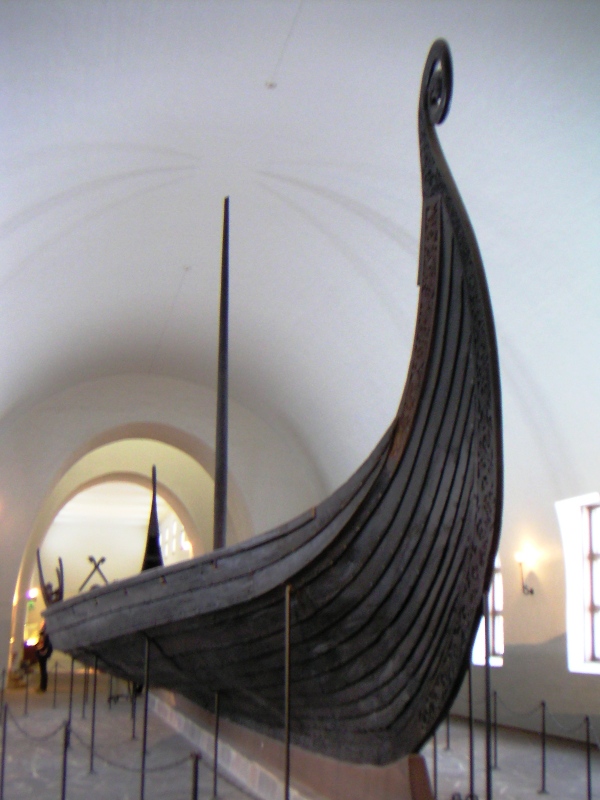
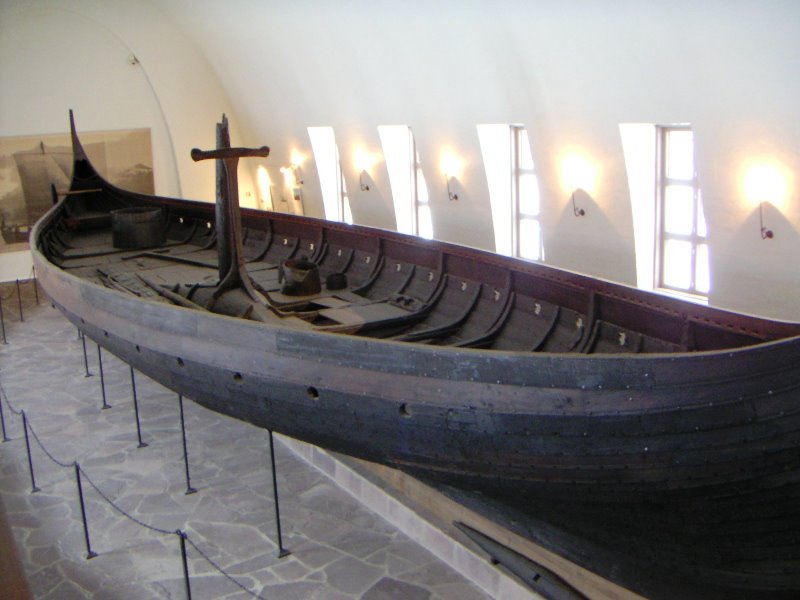
The museum contains the remains of three ships that had been uncovered in the Oslofjord. They had been used as burial ships so along with a corpses, everything they could possibly need for the afterlife was buried under the earth and so was preserved. Two of the ships are very well preserved, but the third one is pretty much just the keel and a few planks. The first boat on display is was just a "pleasure cruiser", but the second one was a more substantial vessel. Along with the boats, the contents of the tombs were displayed including a wagon and lots of smaller artifacts. The Vikings sailed along the shores by day and came ashore at night to feed and sleep - the design of the boats meant they could be beached very easily, allowing them to quickly overrun a town's defenses before the inhabitants could realise what was going on.

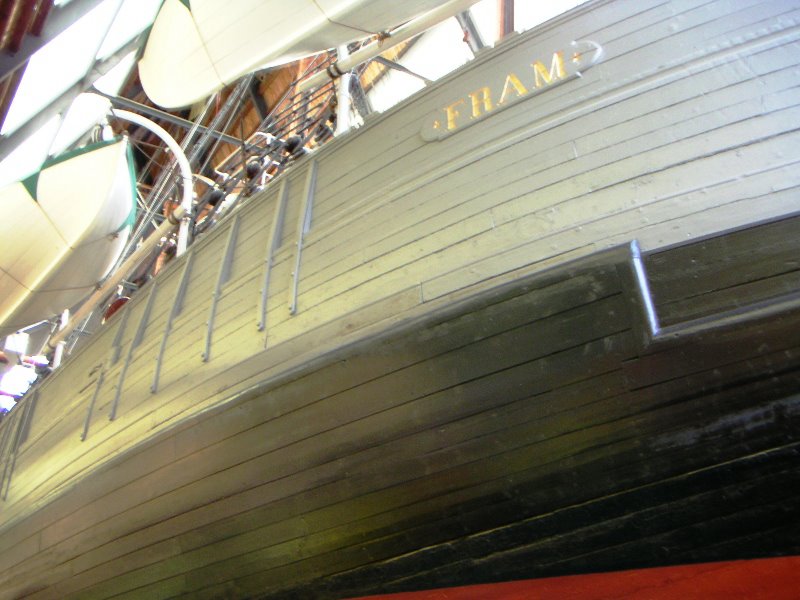
Leaving the museum we walked for 15 minutes down the road to a further two maritime museums. First up was the Fram Museum. The Fram is the strongest wooden ship ever built. Its design means that when surrounded by ice, it is pushed up rather than being crushed like conventional boats at the time. It carried Fridtjof Nansen on a planned five year expedition to the Arctic. It was known that there were currents flowing under the ice sheets, so the expedition set out to use these to drift further north than anyone had been before.
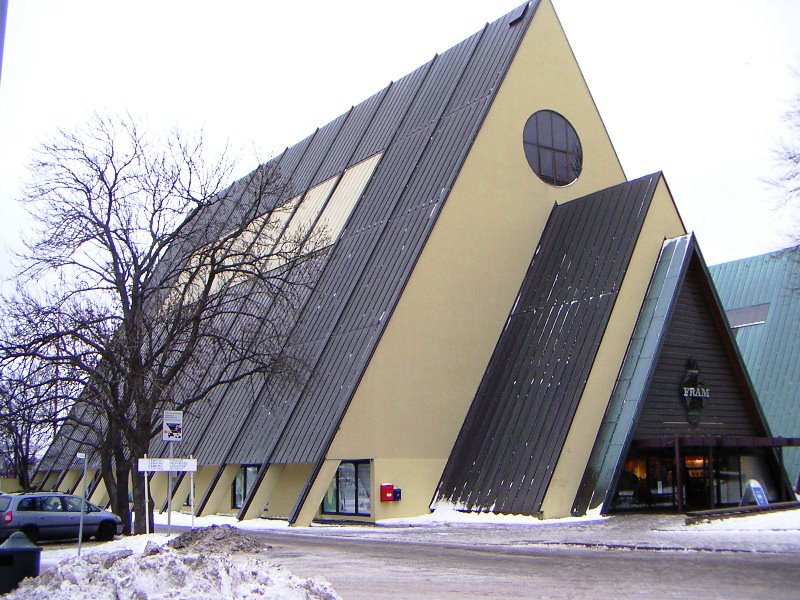
After 3 years adrift in the ice flows, Nansen and Hjalmar Johansen struck out on foot reaching 88o14' - the furthest north anyone had ever been. Their return journey brought them close encounters with polar bears until they met up with a British expedition. Later, the Fram was used by Roald Amundsen to carry his team to Antarctica for their successful South Pole expedition. The Fram remains the boat that has sailed the furthest north and south. To say it is big is an understatement. The museum had to be built around the ship. From keel to deck is 4 storeys and the masts many more. The museum allows us to enter this grand ship and lock around below deck - I certainly can't imagine spending several months on board, never mind several years lodged in Arctic Ice.

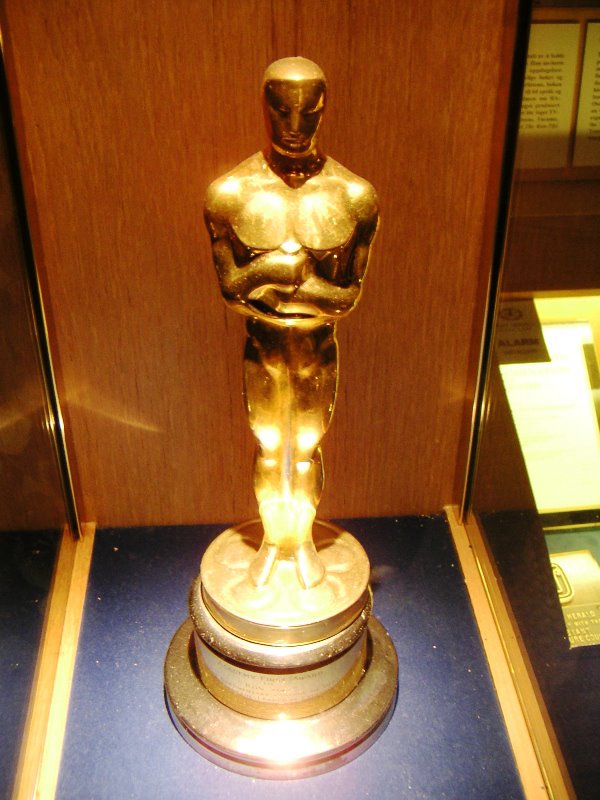
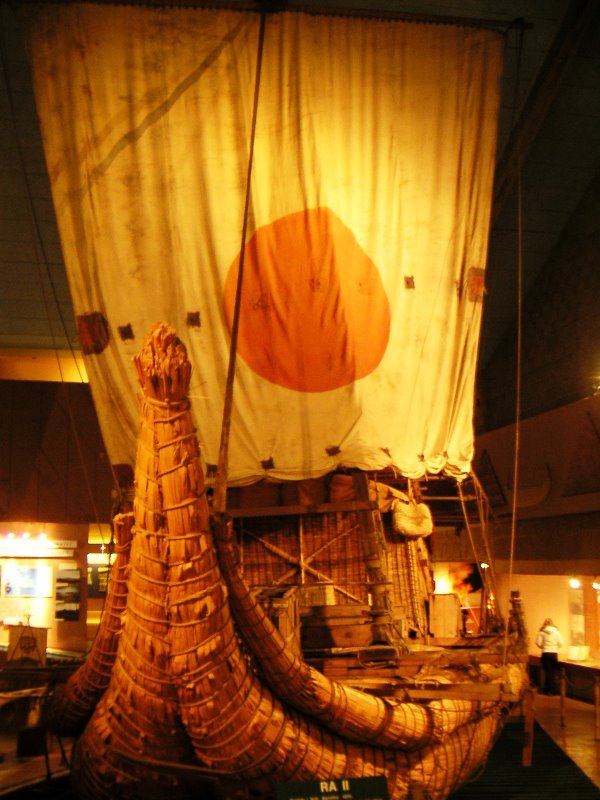
Next door to the Fram Museum is the Kon-Tiki Museum, finishing off our tour of boat-related sights. The Kon-Tiki is a raft made by Norwegian Thor Heyerdahl to prove that South Americans could have settled the pacific islands in Pre-Columbian times. His team traveled to Peru and constructed a raft out of balsawood and other natural materials and in 1947 successfully sailed from South America to several Pacific islands such as Easter Island. Although they took military rations with them, they lived off the sea. A documentary detailing the voyage won Heyerdahl the 1951 Oscar and this is on display.
Given that replica Oscars are not allowed to be made, it was pretty special to be a few inches away from a genuine Oscar statue. In 1970, Heyerdahl set off on the Ra II to show that ancient Africans could have made the crossing to America. Ra II was constructed from papyrus and again successfully completed the crossing from Morocco to central America.
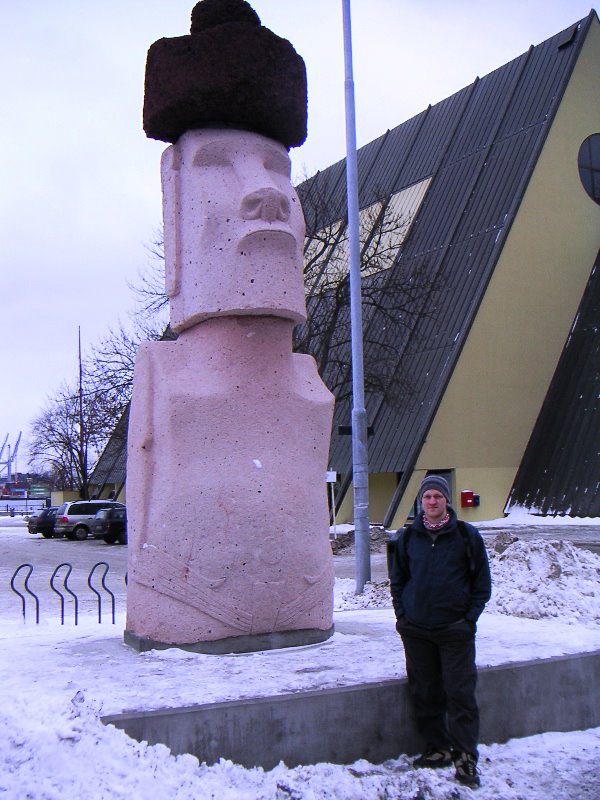
A final vessel, the Tigris was built in the late 70s to show that Indians and Mesopotamians could have traded. However in protest at being denied passage by friendly countries the boat was burnt in protest. The museum contains the Ra II and a replica of the Kon-Tiki. We were pretty bemused to see a large moai sitting outside a Norwegian museum, but thankfully all was explained inside.

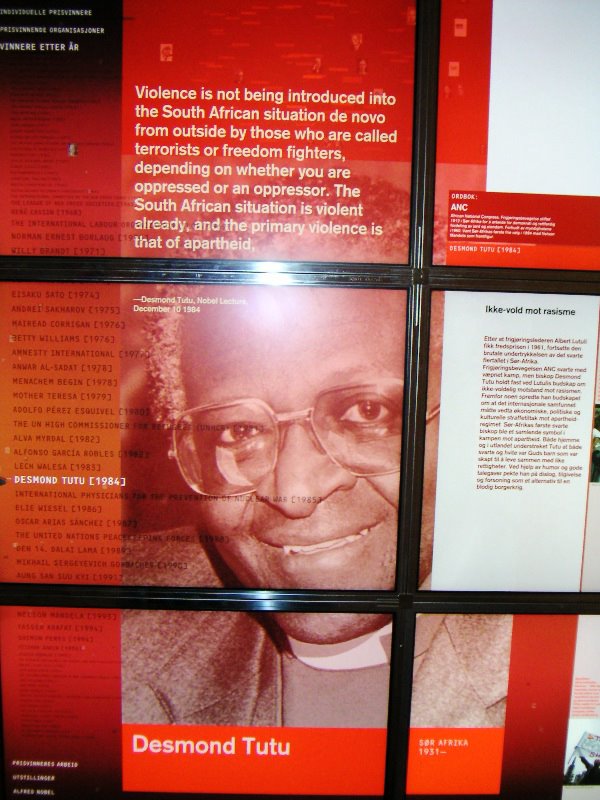
After this we bussed back into the centre to find the newly opened Nobel Peace Museum. Although the majority of Nobel Prizes are awarded in Stockholm, the Peace Prize is awarded annually in Oslo. The peace museum was opened last summer and contains very high tech displays. Upon entering we were greeted with a wall with many holes, each of which emitted voices in different languages giving messages of hope. After a while we decided we weren't going to find the English one and so moved on into the main museum. First up was the Triptych of Hope in which quotes from people such as Hitler, the Dali Lama right up to Homer Simpson. The aim is to depict conflicts in which the Peace Prize recipients have been involved. Moving upstairs we find the current exhibition, entitled Make power - not war.
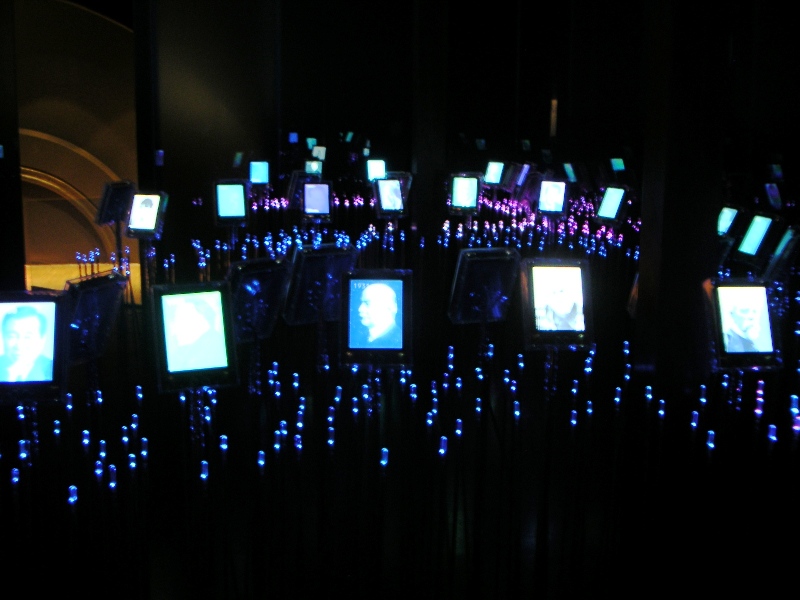
This is a display by the 2005 winner, the international Atomic Energy Agency, highlighting the history of nuclear development and the agencies attempts to stop the proliferation of weapons through the Nuclear Non-Proliferation Treaty and promote the use of nuclear power as an alternative to using fossil fuels. After this came the Nobel Field: a darkened room full of fibre optic reeds and small screens. Every recipient of the Nobel Peace Prize has their own screen. As you approach, motion sensors detect you and displays more details about the recipients work. At least that was the idea; some of the panels needed a little more coercing. Rather annoying after spending a long time trying to get the backgrounds of the recipients (which also weren't in chronological order) the next room featured large video screens where by moving a slider, you could select any recipient and find out more about them... Although the number of exhibits is relatively small, the quality of them made this a fantastic place to see. The exhibits are changed every few months as well so the museum is constantly changing.

Seeing as it was now quite late, we returned to the hotel picking up some lunch (another pølse from the newsstand across from the hotel) and chilled out before heading out for dinner. This time we decided to try to find some genuine Norwegiann dishes. We'd been warned that traditional food was pretty grim, but despite this and thanks to our Wikitravel guide we found a beer hall a few minutes walk from the hotel that served up genuine local food. Mine consisted of salted pork and beef - surprisingly good and very cheap (for Oslo) coming in at under £10 each. We headed back to the hotel and attacked the duty free vodka we had brought with us and made a further few late night trips to the new stand for further pølse and Matt discovered the joys of the cakes from the hotel shop. We had noticed that the bars don't close until late - 4am in some cases and it certainly seemed that the city went out and had it on Saturdays.

Tuesday, January 10, 2006

Oslo Day 2 - The Nicest Capital?

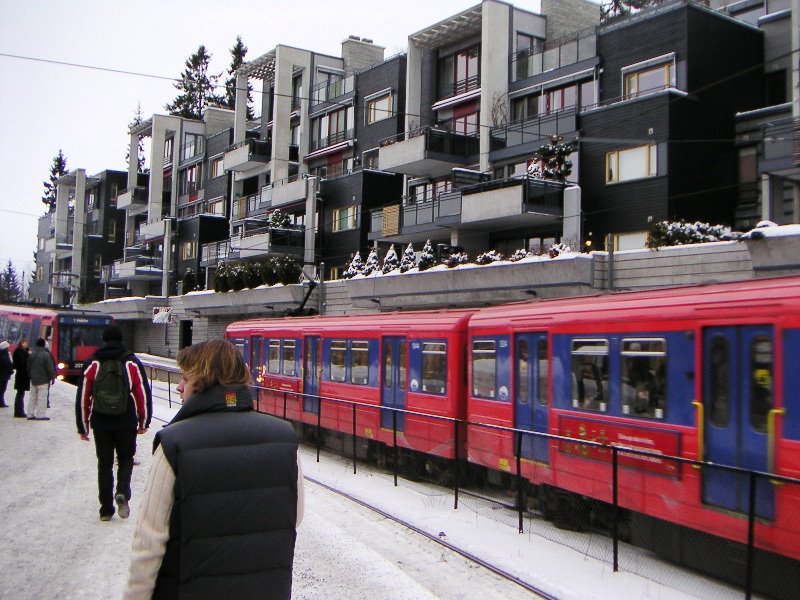
The earliest start we managed - getting up at 9am and out by 10am. Once again, the underfloor heating in the bathroom paid dividends. Our first stop was the front desk to pick up the most import thing to us for our stay: our Oslo passes. These cards grant us free transport on all the cities busses, trams, T-banes (undergrounds) and even ferries during the summer. We get free entry to all the public museums (normally about £6-ish) and 10% off at certain restaurants. We set off back to the station and down into the T-Bane - a cleaner, tramp free version of the underground. Our trip really demonstrated how small the city is; like London, the T-Bane comes above ground in the suburbs which happened a mere 10 minutes into our journey. The T-Bane slowly wound its way into the hills on the northwest side of the city and some time later we arrived at the unassuming Holmenkollen station.


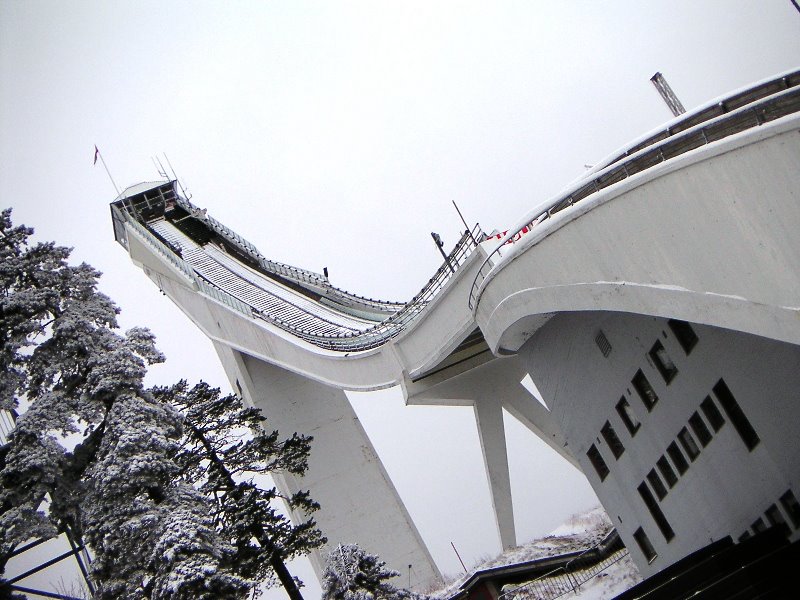
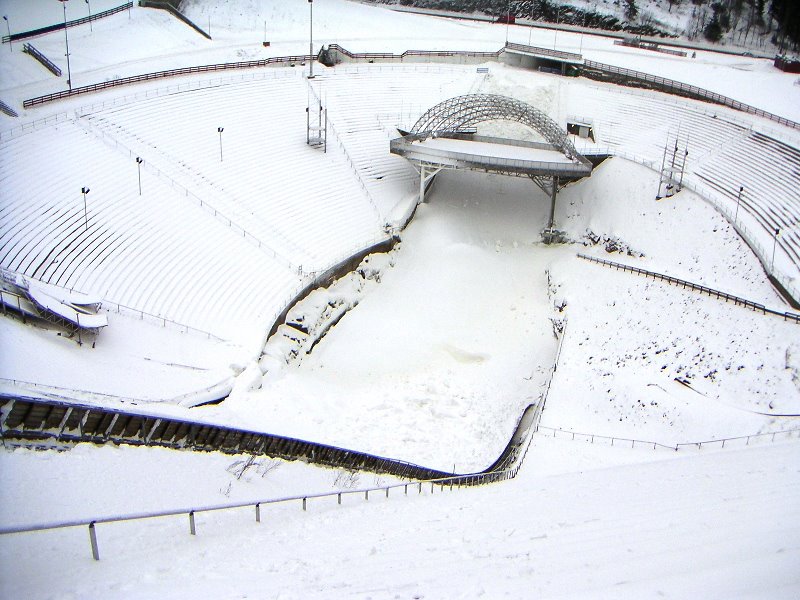
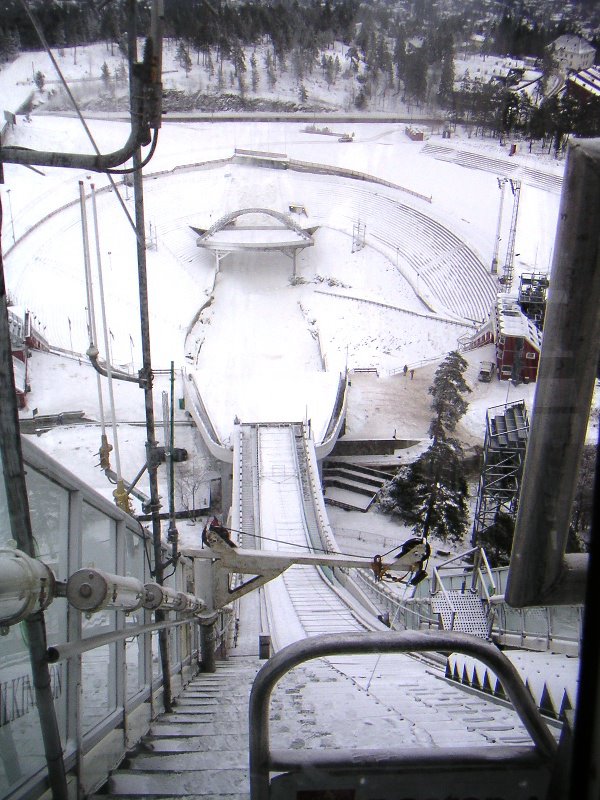
Oslo is on the coast, but we were now at over 250m above sea level. A steep pathway lead us towards one of the main sights of Oslo, the Holmenkollen ski jump and ski museum. The top of the jump towered above us as we approached the 1952 Olympic venue. We paused to look down into the runoff area and were amazed at how steep it is: you essentially fall a very long way when you jump (the current jump height is over 130m). Even more amazing is the fact that in the summer the stadium area fills with water to form a 25m deep lake! We continued to the museum which offered a broad range of displays on the history of skiing, Norweigen expeditions including that of the Fram which we would find out more about the following day, to the Olympics and how the skis vary for different events.
Finally, the tour leads to an elevator and then a series of steep staircases (with very cold handrails) that lead up to the jumping platform. From here we got some amazing views of Oslo and the Oslofjord as well as seeing the pant-wetting sight that skijumpers see before they push off. It makes you wonder how people ever start out ski jumping. More worryingly, due to the lack of support under the booth itself, the whole place shook as people climbed the stairs.

After heading back down (our height above sea level in the tower was about 600m) and heading back into the centre of town we experienced our first pølse. All the newstands, 7-11s and Kwik-E-Mart style places have grills with weiners on them. The pølse is traditionally served with lompe: a potato cake. At around NOK10 (about 90p) they offered surprising value considering the price of most food - they're cheap enough to get 2 or 3 of them. Of course, buying sausages from a newstand isn't without its risks but we survived.

This time we headed to the northeast of the city to visit the Munch Museum.
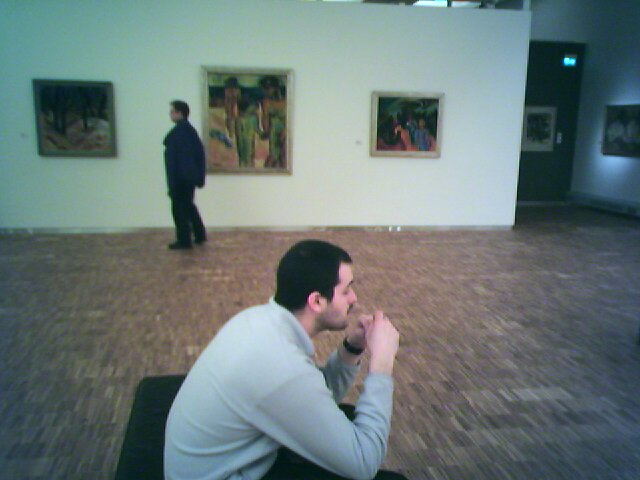
Unfortunately, Edvard Munch's most famous work, The Scream was stolen for the second time in 2004 and has yet to be recovered. Needless to say it's sitting on the wall of some millionaire's house somewhere. Security was tight and we had to leave out coats and bags in lockers and then proceed through a metal detector and put our pocket contents through an x-ray machine...The display itself was pretty good and offered a wide range of styles and artists.


It was nearly 4pm and was pretty dark outside, so we headed back to the hotel, picking up some supplies from a supermarket on the way, to relax for a few hours before heading out in search of food. We came prepared and had printed out the Wikitravel guide to Oslo which mapped the location of plenty of cheaper resaurants. This evening we chose a Vietnamese place. The restaurant was small and homely. The food was excellent (although the crab was very fiddly) and the chilli sauces caused some lip numbing. Thankfully the total cost came to less than £20 per person including drinks. It was fairly late so we headed home (there was no way we could afford to drink out).
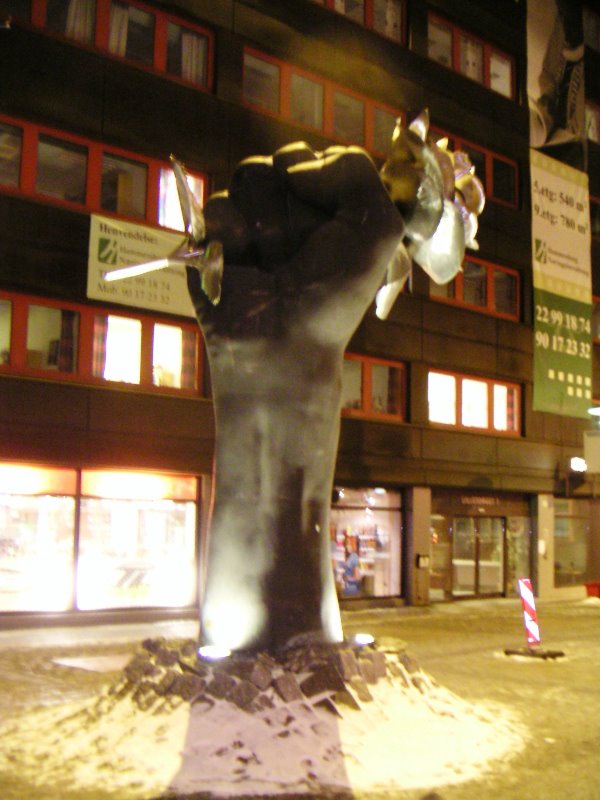
The main thing that struck us on our first full day in Oslo was how clean everything was - there was almost no litter, the T-Banes lacked the graffiti common to the tube. There were sculptures scattered throughout the streets that remained intact. The evening to saw no drunk locals staggering around or indeed any sign of trouble. Oslo, despite being one of Europe's largest capitals, has a population of under 500,000 allowing the city a fantastically relaxed atmosphere. During the whole trip we were never asked to show our passes on any public transport which seems to operate under a trust system. You wouldn't see that in London...

Remember, there are more photos on my MSN Space.

Oslo Day 1 - The Eagle has Landed

We've arrived back safe and sound from Oslo. I'll put up day by day entries. Despite everything that could go wrong (dodgy budget airlines, the airport being 120km from Oslo, having no idea where the hotel was) we suffered no problems at all and had a fantastic time. Most of the better photos are online at my MSN space.


All present and correct, we drove to Newcastle and walked to the terminal. Thankfully, the random number I'd scrawled down on a piece of paper was accepted at the check in and the 3 of us (myself and the 2 Matts I live with) had our boarding passes. After duty-free shopping and food we were eventually called through to the departure gate. We got there to find one important thing missing: the plane. Ryanair it emerges runs a very quick turn around. The plane landed 5 minutes before our scheduled departure. We boarded very quickly and after 10 mins of fuel and baggage loading we were off.


Thankfully rumours of constant PA announcements trying to sell us stuff proved false and we enjoyed a hassle-free trip to Torp Airport. After landing we were the last to leave baggage reclaim. Of course this meant we were taken to one side for a customs check. We exchanged anxious glances, fearing the sound of a latex glove snapping...It never came and after Matt explaining why he had so much food in his bag (his were the only ones checked) we continued outside to the Torp-Express bus. The main thing I noticed (apart from the fields of thick, virgin snow - my first sight of snow in absolutely aaaaaages), was that nobody seemed to close their curtains so we could see into all the houses we drove past. Even though it was dark, the views were great, especially when we had our first glimpse of a town, Drammen, situated on the side of a hill. The drive to Oslo took 100 minutes and after arriving we were left, a little bewildered, in Oslo Bus Station at around midnight. We wandered through to the station were we got direction to the hotel. It was at this point we realised how glad we were that most of the population is fluent in English. The subzero degree temperature was initially a bit of a shock but we soon got used to it. A short 10 minute walk to the hotel was followed by us climbing up to our 4th floor room. This was the cheapest hotel we could find, but it was really quite nice - especially the underfloor heating in the bathroom which we will miss back in house 3.


At about half past midnight we decided to head out. It didn't feel that cold and we managed without scarves and hats. We wandered down to the next road which turned out to be the main street in the city. We eventually found a bar to go into. We were stopped on the door by the bouncer, but unlike England it was merely to shake our hands and find out our names and not telling us we had the wrong "kind" of shoes. The only bad aspect of the trip was about to hit us - our 0.33l of beer (2/3 of a pint) cost us NOK42 - about £3.75). VAT in Norway runs at 25% and the government imposes extra taxes on alcohol to curb alcoholism. We sat around until at 1.50am two guys got up and started an acoustics set on the stage. Like much of Europe the bars are open very late, but there was absolutely no sign of trouble or even people staggering around. Oslo 1 UK 0. Eventually Blondie's "gaydar" started picking up strange vibes from the many pairs of blokes in the pub so we retired to the hotel. We had a lot of climbing to do the next day...

Monday, January 02, 2006

The Actual Top 5 Films of 2005

Batman Begins


It's been 8 years since Batman & Robin (which I haven't seen). The franchise was pretty much dead in the water, but then rumors began circulating. Then it was announced that Chris Nolan was to direct. Coming off the back of the superb Memento and the Insomnia remake, he was a director on a roll. Here he has produced a gritty realistic Gotham. Rather than just give us a ready-made Batman as Tim Burton did, Nolan gives us a background to Bruce Wayne. Before we can get into Batman, Nolan feeds us what drives Bruce - we have to wait an hour Before see Batman. As with the best films, the build up works perfectly: never do we feel impatient to see the batsuit, we are totally caught up in Wayne's inner turmoil as he struggles to deal with his guilt. The story goes back and scrubs out the previous films history. As with the comics, it isn't Jack Napier/The Joker that kills Bruce's parents. The main villains; the Scarecrow and Ra's Al Ghul aren't amongst the most well-known, but it means that they don't overshadow the film.


Sin City


Another comic book adaptation. This time taking 4 of Frank Miller's Sin City tales and moving them nearly frame for frame onto the big screen. Initially wary of Hollywood, Miller was convinced to accept Robert Rodriguez offer after the director produced what is now the opening scene from the film with Josh Hartnet. Shot entirely in front of a green screen, all the environments, including the rain, was added afterwards. This allowed the film to follow the comic by literally copying scenes from the graphic novels. The film itself is not for the faint-hearted. After the recent "watered-down" films such as Terminator 3 and Aliens Vs Predator its a relief that Sin City is a mind-numbing meld of violence, swearing and blatant sexism. It works, because despite everything, you just can't look away - you eyes are drawn to the sight of Bruce Willis beating Nick Stahl's head until its nothing but yellow pulp, Marv de-limbing creepy former hobbit Elijah Wood, or assassin Miho decapitating corrupt police officers and Irish mercenaries left right and center. The thing is just soooooo stylish! Despite all the violence and apparent misogynism, all the leads are trying to do the right thing in their own minds - Marv trying to avenge the girl of his dreams, Dwight trying to protect the girls of Old Town and Hartigan striving to keep his promise to protect Nancy. The good news is e sequel will be with us soon.


Sideways


Now here's a weird film. A gentle comedy about mid-life crisis and wine-tasting. The trouble with billing a film as a comedy these days is that everyone expects the next American Pie with laughs every second. The comedy is almost a by-product of the complete mismatch of characters that Miles and Jack. Linked by the fact that they were room-mates at college, there is no way they should ever have been friends. Yet here they are celebrating Jack's last week of freedom before he gets married. Miles has a relaxing bonding week in mind, but Jack has something else in mind. Miles' past catches up with him - his book is rejected, he discovers his ex-wife has remarried, he has to keep Jack out of as much trouble as he can - involving aggressive golfers, lamas, waitresses and even an enraged naked man. Miles has his chance at happiness it relies on keeping Jack's secret. At the end of the film, we are left on the verge of his redemption. Director Alexander Payne has suggested that he doesn't find it, but the big step for Miles is that he takes the chance and tries. Oh - and don't order Merlot.


The Life Aquatic with Steve Zissou


The latest film from quirkmaster himself, Wes Anderson. Again, he stays with Bill Murray who is enjoying a renaissance. The film remains dead-pan at all times but brings out all sorts of laughs; from the bizarre merchandising (the Zissou Adidas trainers occasionally pop up on eBay but are fakes) to the almost slapstick sight gags such as Hennessy's boat incident and complete contempt shown towards the interns. The film turns to the surreal with the Spanish versions of Bowie songs, the bizarre creatures and the shootouts with the pirates. As with his earlier films, Anderson can move us to tears as well. The appearance of the shark to a Sigur Ros track and the burial at the sea and the final triumphant march, all strike a chord. A lot of people don't get Anderson and his quirky films and indeed they may need a second watch, but don't let that put you off.


Wallace and Gromit and the Curse of the Were Rabbit


his one only just made the list as I only saw it last week. Initially I was doubtful this would be good - surely, Nick Park couldn't extend the winning Wallace and Gromit formula to an entire film; surely Hollywood would interfere and remove the unique "Britishness" of it. Thankfully it turned out wonderfully. The Americans may have their own version but ours is so proud of its English heritage that it can't help but make you smile. As for the film, Aardman have manage to create a film that charms and entertains so much. The running time means that there is plenty of time for the characters to develop and yet the film never feels overlong and all the jokes hit home perfectly, from the classic Wallace and Gromit fodder such as the wacky machines that inevitably go wrong to moments like Gromit and Philip struggling to find change so they can continue their chase to the cheese humor, this film has been so lovingly made. This is everything Chicken Run should have been. The only down-side is the long wait we'll have to endure until the next film.


So there you have it - what I thought were the best films that I saw last year. There are good films coming up. I've got Grave of the Fireflies to watch which I'm apprehensive about watching - simply reading the user reviews on imdb chokes me up so I dread to think what the film itself will do. This powerful antiwar film is screened every year in Japan on the anniversary of the dropping of Little Boy on Hiroshima. Unfortunately, since it's animated, many people will pass this off as a childrens film, which it certainly isn't. Next up is Ghost in the Shell: Innocence, the trailer for which looks amazing...


Oh - and Happy New Year

Friday, December 30, 2005

Top 5 Non-2005 Films of the Year

This is a list of films that I saw for the first times this year even though they were made and released before 2004.

Napoleon Dynamite


Released at the Sundance Festival 2004 and edited on the producers' Mac, this film is marmite: people either love it or loathe it. Thankfully, the majority of people I've shown it to got it and loved it. Essentially a series of short clips, strung together into a feature length film, it acts as a window into the life of geeky outcast Napoleon. At high school a backwards Iowa town, still living in the 80s, Napoleon hates school. Living at home with his grandmother and 32-year old brother, Kip (who spends his days "chatting to babes online"), his life starts to change with a visit from local weirdo Deb, the arrival of Pedro - a new student from Mexico. When Napoleon's grandmother is injured in a freak dune-buggy accident, their '82-obsessed Uncle Rico arrives to "look after" the boys. Although it gets off to a slow start and some of the early gags don't quite hit home, once the film gets going some of the set-ups such as taking Pedro's bike off a "sweet jump", Napoleon's art "skills", Kip and Rico's money-making demonstrations, "Pedro's protection" and the time machine. Even though Napoleon starts off the film being pretty obnoxious, by the end, we are really rooting for him and as the picture fades to the strains of When in Rome's The Promise, we feel satisfied that Napoleon has made some genuine progress and jokes set up early on in the film such as Rex and his Rex-Kwan-Do system pay off. Despite some suggesting that the film actively promotes Mormon values, this is a very sweet film - things such as Pedro's naivete that cause him to shave his hair and Napoleon's desire to help out Pedro in the presidential race no matter what. It's especially nice as it's a film that cost only $40,000 to make (with the main star Jon Heder earning only $1000) and broke though by word of mouth alone. After the initial success, an epilogue was filmed later and the 10 minutes sequence cost half as much again as the rest of the film. The film grossed $40m in the US alone.

Garden State


Another Sundance premiered film. This one was written and directed by Scrubs star Zach Braff. I've already mentioned the fantastic soundtrack and it fits the film so well. The film deals with Andrew "Large" Largeman - guy in his mid 20s whose life is completely numb due to the large number of drugs prescribed to him by his father. He lives alone in LA in a completely sterile world. Although he had success in films earlier in life he now waits at a Vietnamese restaurant. When is father calls to tell him his mother has died, he decides to stop taking his medication. As his mother's funeral winds down, so does his lack of feeling. He reintegrates himself with his childhood friends who have had variety of interesting lives, although they still reside in their small childhood town.
He soon meets Sam (Natalie Portman), a girl who is everything he isn't. The 2 of them seek acceptance in each other. Their relationship slowly builds throughout the film until they finally get together over a Simon and Garfunkel track that blends into the gentle beauty of Iron and Wine's cover of Such Great Hights in a manner similar to Donnie and Gretchen in 2001's Donnie Darko. The film acts as a metaphor; as Large comes back to full consciousness you can draw parallels with slowly realising that you have no idea how you got to where you are in life, but that it's never to late to "explore the infinite abyss". At one point Large asks Sam, "You know that point in your life when you realize that the house that you grew up in isn't really your home anymore? All of the sudden even though you have some place where you can put your stuff that idea of home is gone." - it strikes a chord with me. Although I technically still live at "home" with my parents, it doesn't feel like home anymore - that idea is gone. He continues, "it just sort of happens one day and it's just gone. And you can never get it back. It's like you get homesick for a place that doesn't exist...You won't have this feeling again until you create a new idea of home for yourself, you know, for your kids, for the family you start, it's like a cycle or something." Despite all this the films manages some very comedic moments - from Large be written on as he is passed out to his fear of dogs. Despite being a rookie director, Braff draws out fantastic performances from his cast to create a moving, genuine and beautiful film. The end has drawn criticism, but really the film couldn't have been ended any other way after Large's experiences. The only problem is the lack of depth given to Gideon, Large's estranged father; more scenes were filmed, but only feature as deleted scenes on the DVD. Do yourself a favour and watch this film.

Nausicaa of the Valley of the Wind


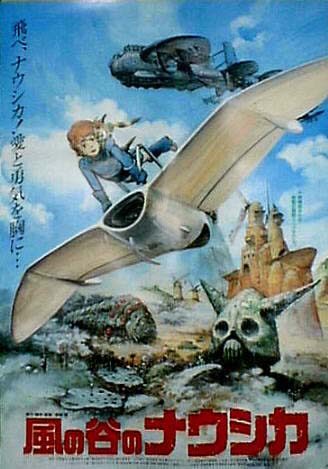
The first of 2 Miyazaki films in this list. Originally conceived in the late 70s, Miyazaki failed to get funding for his project as the film wasn't based on manga. Miyazaki went away and created a manga series for Nausicaa which took off. The next time he went to get funding the project was green lit and in 1984 Nausicaa was released to expectant Japanese fans. In the aftermath of the film's release Miyazaki set up the now-renowned Studio Ghibli with his friend and mentor Isao Takahata. Nausicaa only saw the light of day in the West in a butchered version called Warriors of the Wind. Finally in 2005, the DVD of the original untampered-with film was released in the West with a newly recorded English dub featuring the likes of Patrick Stewart, Uma Thurman and Alison Lohman. In the distant future, civilisation was destroyed by the seven warriors during the "seven days of fire". The world is left covered by a toxic jungle guarded by giant insects with small groups of humans surviving wherever they can. One such haven is the Valley of the Wind which is protected from the toxic spores that spread the jungle by the winds that flow through the valley. As with all Miyazaki's film there is a strong theme of aviation throughout the film as we follow the adventures of Princess Nausicaa as she tries to help her people when 2 rival warring kingdoms arrive at the Valley, both intent on reviving one of the soldiers to destroy the jungle and insects and reclaim the Earth for mankind.
Using a retrofuture that would resurface in 1986's Laputa: Castle in the Sky (despite the medieval landscapes, giant flying machines exist), Miyazaki crafts a fantastic tale. He refuses to create stereotypical bad guys - in the minds of the invaders are thoughts of destroying the jungles to allow mankind to come back from the brink of destruction, the story twists as foes become friends and Miyazaki's breathtaking animation infuses a superb sense of freedom and space for the airborne sequences and sense of awe as the rebirth of the warrior draws close. The theme of man versus nature would be revisited in 1997 with the release of Mononoke Hime. A very 80s soundtrack is provided courtesy of long-time Miyazaki collaborator Joe Hisaishi. If you want to see how a film can draw you in until you forget it is animated, then watch this film.


Howl's Moving Castle


Another Miyazaki release. This first saw the light in 2004 in Japan and finally reached these shores in September. Although this was easily the best animation of the year, it was the first Miyazaki film that felt like Miyazaki-by-numbers. The thing I've loved about Studio Ghibli's output is how varied it is - we've had films about the environment (Nausicaa/Mononoke Hime), an Indiana Jones style fantastic adventure (Laputa), coming of age tales (Kiki's Delivery Sevice, Whisper of the Heart and Spirited Away), heartbreaking adaptions (Grave of the Fireflies), the freedom and romanticism of flight (Porco Rosso), illustrations of Japanese life (My Neighbours the Yamadas), films that simply capture the imagination, magic and innocence of childhood (My Neighbour Totoro) and, er, a film about shape-shifting tanooki and their testicles (Pom Poko). Howl's Moving Castle ticks all the Miyazaki boxes; a shy, unassuming heroine, a roguish protagonist and his sidekick who share a secret history, baddies who turn out to be not that bad and a fantastic environment with a bit a flying thrown in for good measure. Perhaps it's because it's adapted from a book, perhaps it's because it followed the similarly themed Spirited Away or maybe simply because I've only seen the English dub (although as with all the new Ghibli English dubs, this was overseen by Pixar).
No doubt the Japanese version of Calcifer would have been more restrained than Billy Crystal (who was a lot better than I expected) the same way that Phil Hartman's Jiji in Kiki's Delivery Service significantly alters the outcome of that film. The resolution to the war is almost laughable in how it comes about (it involves the scarecrow). But there is something so moving and wonderful about all Miyazaki's work that these problems are easily overlooked. The scene where Sophie must climb a large staircase with the Witch of the Waste is fantastic. The undoubted star of the show though is the castle itself - again part of a Victorian retrofuture - and Calcifer, the flame spirit that powers the castle. The film is so enjoyable that it enchanted me and my housemates. To say it is a below-par Ghibli film, it still beats anything put out by Disney and Dreamworks in many years. In fact, the only animation studio that can match Ghibli is John Lassiter's Pixar. If you haven't already, see this film - unless you are completely dead inside you will be charmed and won over with ease.


Ghost in the Shell: Stand Alone Complex 1st GiG


This is a bit of a cheat because this is actually a boxset of a TV series, but it is so fantastic that it deserved a place on the list. Utilising the same set-up as the film Ghost in the Shell, but in an alternative timeline, the show follows Public Security Section 9 - a secret division of the government. In a future where man has become integrated with technology, body and brain augmentations are common and the majority of Section 9 are full cyborgs - their bodies replaced with heavy duty "shells". The only remaining human aspect of them is their ghost - essentially their human spirit. In this world people can communicate telepathically over the net, brains can be hacked and cyberterorism is the source of most of section 9's problems.
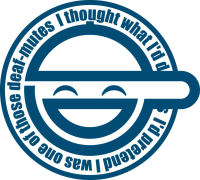
All the members from the film, Kusanagi, Batou, Ishikawa and the relatively human Togusa and section chief Aramaki return in addition to some new characters who are developed over the series including a sniper with a cybernetically enhanced eye that can be hooked up to GPS to gain superhuman accuracy. The stars of the show (and their own mini-postcredit show) are the Tachicomas - small AI driven tanks. At the start of the series they are child-like; eager to learn about the world they "live" in, but at the same time fiercely loyal and quick to dish out lethal force if so ordered. The Stand Alone Complex title refers to the nature of the series. Like such western shows as The X-Files and Buffy, the series contains sand alone episodes and complex episodes which form the major series arc. At the same time the characters (especially the Tachicomas) develop over the entire season arc. The stand alone episodes range from action oriented missions such as a hostage rescue, the storming of a terrorist hideout and chasing of a runaway tank, to more character based episodes and even entire episodes given over to the tachicomas becoming self-aware. The complex episodes link together in to build up in a similar way to Fox's 24. Told from the point of view of Togusa (who apart from some minor brain augmentations to allow him to contact the team is entirely human). It starts out with the team uncovering a surveillance conspiracy in the police force and soon becomes linked to the Laughingman incident - a kidnapping by a skilled hacker of the president of a large biotech firm some years earlier. The hacker hacked into bystanders eye's to conceal his identity with a logo and the phrase "I thought what I'd do was I'd pretend I was one of those deaf-mutes" from Salinger's Catcher in the Rye. The plot escalates to unravel a conspiracy that certain people will go to any lengths to cover up the truth behind the incident. The intrigue is frequently broken by exciting action sequences featuring the extensive section 9 hardware.
Initially it may not seem that accessible - the first episode throws viewers in at the deep end and explains things later on. The complex episodes too, are exactly that, yet never suffer from the outrageous twists of 24. Whilst the film and it's 2004 follow-up - Innocence - are based around what it means to be humans and the dangers of merging with technology, the series puts these topics on the back burner only allowing them to surface at key moments during the series. The music is sublime and perfectly complements the lush visuals. The opening credits are fully CG animated, but rest assured that the episodes themselves are done with traditional animation. As mentioned, the episodes are followed by a short called Tachicoma Days where the lovable Tachicomas perform an on going skit based on the contents of the episode.
The 26 episodes fly by. There is a gap in the complex story in the middle but it returns at the end building up to a fantastic conclusion, although since the episodes are only 25 minutes, the final episode is fairly subdued with most of the action having occurred in the previous 2 episodes. A second series: 2nd GiG has been aired in Japan and a 3rd series is eagerly awaited. The complete boxset of the 1st GiG is available for only £30 and is definitely worth a look.


Tomorrow I'll put up the top 5 films of 2005. If you are interested by the films of Studio Ghibli, then please check out Nausicaa.net for much more information and news.

Thursday, December 29, 2005

Films that didn't quite make it

Okay - some top 5 lists are coming, but here is a discussion about some of the films that didn't make the list.


Team America: World Police
Even on paper this looked funny, a supermarionation-esque puppet show, deliberately showing up all the limitations of the format. The plot - a satire of America's war on terror and the actions of bandwagon-jumping celebrities. As ever Matt Stone and Trey Parker don't pull any punches as they set about their targets. The first time I saw this film I laughed so hard that it hurt. The sheer unPC-ness of some of the scenes: ironic stereotyping of Arabs, decidedly odd puppet-sex, excessive projectile vomiting and unnecessary uber-violence. Unfortunately, the film falls down in a couple of areas. Firstly, the film attacks so many groups (the US government, celebrities who want to be seen to be helping, over-the-top films) that all the messages tend to blur and get lost - are we supposed to be rooting for the team or not? Secondly, the film gets less funny on repeated viewings. Matt & Trey's previous South Park film also suffered from this as the novelty of the swearing wore off. Team America does feature some very funny moments: the 3 kinds of people speech, Gary's disguise and the script ("I'll rip your balls off and shove them up your ass so the next time you shit, you'll shit all over your balls"). The longest lasting memory is the soundtrack. From attacks on the film Pearl harbor through 80s montage scenes to the fantastic America: Fuck Yeah. As is the trend these days, an unrated DVD was released that featured the uncut sex-scene that is even more extreme In order to secure an R rating from the MPAA, the scene had to be resubmitted 9 times. In the words of the directors, the uncut scene features urination, defecation and ejaculation" - derka!

Star Wars: Episode 3 - Revenge of the Sith
Oh dear George, what have you done. One of the reasons for the success of the original trilogy was that although George Lucas wrote the screenplays, he brought in Irvin Kershner and Richard Maquand to direct Empire and Jedi. It's a little known fact the Lucas himself directed nothing between 1977's Star Wars and 1999's Episode 1. It shows a lot. Lucas tries to cram in far too much and yet somehow the story is lacking. Everyone knows what happens, there is no surprise that Palpatine turns out to be the Sith lord Sidious. The major flaws are in Anakin's turn to the Dark Side. After slaying Windu, he breaks down, questioning what he has done given that he knows how evil Palpatine is. Yet all it takes is for Palpatine to order that he kills all the children at the Jedi temple and he is convinced... Follow this up with Yoda's duel with Sidious - after a result of a no-scre draw, Yoda declares he must go into exile - effectively subjecting the galaxy to 20 years of tyrannical rule. To finish off, who could forget renowned shit-kicker Darth Vader's cry of noooooooooo? For a much better Star Wars experience, try out the Clone Wars animation series - despite the apparently shortness of the episodes, they are a fantastic insight to the development of the characters. Most unforgivable though is the character of General Grevous - in Clone Wars he is introduced as a fear-inspiring Jedi-trained robot who wields upto 4 lightsabres and has defeated many Jedi in combat. In Sith, he appears as a wheezing coward who is dispatched with relative ease by Obi-Wan. Other characters such as Bail Organa are underused to the point where you have to question their inclusion. It seems George has made a fan-boy movie instead surrounded by yes-men such as Rick McCallum who really should have told him how vacuous the prequel trilogy has been.

Fantastic 4
After the success of comic-to-film adaptations of Spiderman, X-Men and Sin City came Fantastic 4. The problem with this film was the plot. Many flaws (including one situation designed simply to get Jessica Alba into a state of undress), forgettable villain, tired "it's what inside that counts", C-list cast and an "is that it?" ending really didn't do it for me or many of my friends that saw it. Dispite the ending being set up for a sequal, hopefully one will never see the light of day. This joins the likes of Elektra, Hell Boy and Captain America an exmple of how not to make a comic book movie.


Tomorrow , I'll try to get u a list of the top 5 films that I've seen for the first times this year that weren't actually released in 2005.

Wednesday, December 28, 2005

Copy Protection

The last 18 months have seen 2 of the largest groups in America, the Motion Picture Association of America (MPAA) and the Recording Industry Association of America (RIAA) take a remarkably naive stance on the pirating of their copyrighted materials. It's fairly well known, that dodgy knockoff CDs and DVDs arrive in this country from the far East where they have been pressed in professional factories and are sold at markets all over the country, both here and the US. The money made from these sales will innevitably find its way back to international crime gangs and deprives the industries of millions of US$ every year.

However, for some unknown reason, the industry seems remarkably content attacking not these gangs of profit-making criminals, but college students, little old ladies and other everyday people: essentially their on customers. How can some students downloading a few films possibly dent the profits of these massive companies? Yes, something needs to be one about piracy, but the industry is on the verge of a very pulic backlash with these attacks on very "soft" and easy targets. While the eastern presses continue churning out hundreds of thousand of counterfeit discs unchallenged, sharing as little as a few songs online could be enough to land you a court appearence and a hefty fine.

The RIAA in particular been particularly agressive in this respect. Recording studios have spent millions developing CD copy-protection systems that only succeed in doing one thing - annoying people who actually buy the products. The idea beind the copy protection is that when the CD is inserted into CD-Rom drive, either software is launched that "inhibits" the abilities of the computer, or the CD contains corrupt Table of Contents (TOC) will confuse the drive. In some cases, the CD tracks aren't playable, but instead low quality WMA files are all that is available.


The problem is so severe that Philips took out a worldwide injunction to stop the record industry calling these products CDs. To be classed as a CD, a disc must bear the Compact Disc logo (your CD player manual will state somewhere to only play discs bearing this symbol). Discs with copy protection are now not allowed to carry this logo as they violate the CD standard. Some old (and not so old) players may simply refuse to play these discs. This is bad enough, but with all the millions thrown at these "solutions" they are remarkably ineffective. All too frequently the software is written for Windows, so all you have to do is stick the CD (sorry, disc) into a Mac or PC that doesn't run Windows and you can rip and copy to your heart's content. Even worse, some protection software can be disbled by simply disabling the Autorun feature of Windows (which can be temporarily done by holding down the shift key after inserting the disc). One company even tried to sue an individual that made this information available. Of course, all it takes is for a CD to be copied once and thats it. All that money and it can be overcome by pressing one key.

The MPAA made the same mistake. When DVDs were launched they were encrypted using a method called the Content Scrambing System (CSS) so only licenced players could play back the files. One software company, Xing, produced DVD playing software that didn't hide the keys well enough. A Norwegen, the so-called DVD Jon, wanted to play his DVDs on a PC that didn't run Windows, but noone would release such program so he hacked the Xing player and created a utility called DeCSS. Rather than admit that their encryption was inadequate, the MPAA tried to sue DVD Jon, but it was too late - almost overnight, DVD rippers became available and the format was wide open. DVD Jon then rubbed salt into their wounds when he was found not guilty with the judge ruling that he broken no laws by breaking the encryption to watch a DVD that had purchased.

The next generation of DVD is about to be unleshed upon us; using a shorter wavelength laser, more information can be stored on the familiar 12cm discs which will allow for a much sharper picture and higher quality soundtracks. Unfotunately, 2 formats are vying for recogntion. The winner of this contest will be decided by who can get the most studios to sign up to their system. This of couse has meant that both formats are bending over backwards to accommodate the MPAAs requests. Possibly the most worrying aspect is that it looks fairly likely that the players will require an internet connection and upon inserting a disc, a serial code will be checked against the player code on a central server. If a player is attempting to play a non-licenced disc, the player won't receive permission to play the disc and the the most extreme senario, actually be locked from playing any further discs. While none of this is certain, it can be conceived that if your film's code or even worse, your player's code is cloned then, through no fault of your own, you may find yourself unable to watch your own films...

Much like the RIAA, there are a couple of copy potection schemes available, but likeise are a complete waste of money: one boasted that it was effective against 97% of DVD ripping software: shame it only takes one rip to make that meaningless...

Unfortunately the MPAA/RIAA have some powerful lobbyists in the US and managed to get the Digital Millennium Copyright Act (DMCA) passed which severely cuts down your rights on what you can do with films and music you've just bought.
Most annoyingly, it seems that yet another organisation is jumping on the bandwagon. The Music Publishers Association (MPA) is now jumping up and down about "unlicenced reproduction of lyrics and guitar tablature" on the internet. Their president went on the record recently as saying that people who publish song lyrics on the net should be thrown in jail because it "deprives the artists of income". I'm sorry, but what? What income? What means are there to buy just the lyrics of songs? As for tabs, the "official" tablature books are in most cases hopelessly wrong and/or incomplete and I'm sure most guitarists will agree with me. Tabs are also an interpretation of a song. There are only so many chord progressions so why aren't songs that sound similar leading to massve courtroom battles? Even more unbelievably music shops are being forced to pay a "performance" tax to cover the "public performance" of punters playing recognisable tunes as they try out instruments in the shop. It sounds like something from The Day Today, but sadly it's actually happening.

Thankfully though, there may be an end to all this madness. In October 2005 Mark Russinovich, a computer researcher, found that Sony had employed a new copy protection scheme on some of its music releases. This method employed what is known in hacking circles as root-kit; essentially a way of hiding code deep inside the operating system of your computer. Nothing on the pakaging or EULA mentioned this. More worryingly, there was no way to uninstall this software. Appearing first on a blog, the media soon caught wind of it and before Sony knew what was happening the whole thing had blown up in their face. Most people didn't understand what a root kit was, but they soon understood that it was very bad as the media explained that it was frequently used by virus writers to hide thir creations from antivirus firms. Sony denied there was a problem, clearly not understanding what they had done (they had licenced the software from UK company). Sure enough there were soon viruses that took advantage of this code. Since the code was invisible to most anti-virus programs, IT supervisors over the world had no way of knowing which of their machines were infected - especially hindered as Sony refused to release a list of discs containing the software. Under the new DCMA actually removing the software was technically illegal aswell. One by one, anti-virus firms labelled the Sony software as a risk, but worse was to come...

Sony had still not released a removal tool. Users also found that the software "phoned home" something that again, was not mentioned in the EULA. This lead Microsoft to brand the Sony software as spyware. Sony finally released a removal tool, but unfortunately this hadn't been checked and introduced a whole new security risk. As a final kick to the teeth of Sony, examining the software it was found that used cother people's software, including, ironically, software written by DVD Jon himself... Although the software was free, anyone who uses it is legally obliged to acknowledge the author, suddenly Sony found itself possibly guilty of copright violation with some people commenting that the RIAA itself set a precedent of seeking a few thousand $ per offence when it went after girls, so taking into account the millions of CDs sold, the copyright violation would bankrupt Sony many times over.
Finally the US government stepped in and several states are suing Sony over the incident. A worldwide boycot of Sony products was called over Christmas, which thanks to the power of the internet has possibly actually affected Sony's profits. In response, Sony have aborted the development of copy protection schemes. All we need now is a mssive public outcry over this, or else a lot of music fans are going to be fined for daring to publish the lyrics to their favorite songs on the net...


Whatever happens it's clear that the record companies cannot go on like this. Go into HMV or Virgin and try to find any back catalogue release - it'll be at least £15.99. dd on the possibility of not actually being able to play the CD even if you buy it and you can see why people download music. Even those that pay for it and use iTunes are facing a price rise from the standard 99c/track. Song for song, the industry makes much more profit on digital music since it doesn't have to produce CDs and inlays, so pressurising Apple to increase the pricing is pure greed. Afor the artists themselves - those who the RIAA claim to represent - are they seeing an increase in income? All it would take is for a few well established acts such as Radiohead, Coldplay and U2 to start releasing albums themselves without record labels and the the whle industry could changefor the better.

This has been my first proper rant and I'm sorry it was a bit geeky, but then I am a geek. I feel that I should warn people that if they industrgets it way - you won't own the music you buy, you'll merely be renting it. In the next few days, I'll put up some more positive stuff, such as lists of the best films and music of the year.
Sunday, December 25, 2005

Happy Christmas

A very happy Christmas to everyone reading (if I'm lucky, 5 including myself)!