Wednesday, April 23, 2008

Sapporo snow festival 2008

It was a trip that I didn't think would happen. Over the previous 6 months the trip had been on again and off again pretty regularly. Eventually, a last minute decision saw James and I book flights and hotels. It was on. We decided to take the hard option and meet in Tokyo rather than a hub airport en route as James could get a cheap deal (and hotel) on BA where as I opted for AirFrance-KLM. The first order of business was to actually get to the airport. I left my car at one of the nearby airparks and got the bus to the airport. Despite the 10am KLM flight being very popular I was the only one on the bus. As always I'd checked in online to reserve my precious window seat. After wandering around duty free for a while I took my seat on the 737-400 and soon we were off to Amsterdam. The flight landed on time but as the arrival runway was the new one it took another 30 minutes to taxi to the stand. A quick check of the screens showed my onward flight was on time and I had a couple of hours to kill. After wandering the lengths on Schiphol I did the most important thing I did that day – I went to the toilet. Going to the toilet on planes is just about my least favourite thing ever so anything I can do to reduce the possibility of needing to go is essential. We boarded the 777-200ER – even though I was one of the last to board there were still some of the free papers left. The KLM 777 fleet has a great AVOD system – there's about 80 films to choose from. As part of my “beat jet-lag” plan, I watched a load of films: Michael Clayton, Stardust and Superbad were among the offerings I watched. Like last time were only offered one meal and at about 2/3 distance we were offered the usual AF-KLM choice of “cup noodle or ice cream.” As I was expecting this my answer to the question was, “both please.” In what seemed like no time at all we crossed the coastline of northern Japan.

Japan 2008 004 Japan 2008 011

The northern regions were under a blanket covering of snow which certainly boded well for the Snow Festival. Soon we descended as we hit the east coast and spun round to land at Narita. After getting off and finding my legs didn't really work (and visiting the toilet) I got through immigration and got my bags. James' flight was the next one due on the luggage belt so I sat and waited (much to the puzzlement of the Narita staff). Brits started arriving and more and more came but no James. Just as my mind was starting to believe our decision to meet here was a bad one he turned up. We got through customs and went down to the trains. After trying to be sold a bus ticket to Haneda (3 times the cost of a train ticket) we managed to get a train timetable. For a country with one of the world's most famous train services, you'd have thought there would be a direct train between the two airports, but no. We had to get the local commuter service which stopped at every intermediate station. After an hour we still hadn't reached the changeover station and were finding merely being awake tiring. Eventually we limped into Aoto and changed trains. Pretty soon we were at the internal airport Haneda. After finding that the automatic check-in machines weren't as easy to decrypt as the train ticket machines we checked in the regular way. We still had several hours so we wandered up to the viewing area. It's like how UK airports used to be – free and close-up views of the apron and runways. We went back down to a conbini (from this point on, conbinis will be referred to as “kwik-e-marts”) and bought some sushi. Haneda used to be Tokyo's main airport so it's pretty big. It took us 20 minutes to walk to the gate (and this terminal was only for JAL flights: ANA has its own terminal). We boarded the 767 and found that there were only about 30 people on the flight so we could choose where to sit. The plane had pilot cam, that allowed us to get a pilot's -eye view, but after taking off the long day caught up and we fell asleep. Soon we arrived in Sapporo and there was a lot of snow. Despite Tokyo-Sapporo being one of the busiest routes in the world, Sapporo airport is pretty small. The train link to the city was easier to work out than our cross-Tokyo journey and soon we were at the main station.

Japan 2008 020 Japan 2008 023

Japan 2008 022 Japan 2008 026 Japan 2008 031

Thankfully our £150/night hotel (the perils of booking late in Snow Festival season)was very close and we were soon in our cramped (but plush) room. To continue the “beat jet-lag” plan we had to stay awake for a few more hours so we ventured out into the cold to check out the festival. We headed to the Sapporo tower and soon were among the ice sculptures. To say some of them were big is a massive understatement. The big ones are carved from 20x20x20m snow cubes. They depict various things from promotional items (prince Caspian) to just random collages of world landmarks. As it was dark, the sculptures had light shows and one had a small booth with children playing music. At first we though they were simply playing keyboards along to a backing track, but it soon turned out that they were also playing all the percussion, selecting individual drums via a battery of foot pedals. I dread to think how many hours a day these kids had to practice, but it was amazing and a bit spooky. The main street is very long so eventually we headed down a side street and found a MOS Burger. We wandered back to the hotel via a Kwik-e-mart where James purchased a box a of chocolate-covered Leibniz biscuits that were destined to become the snack of choice for the whole trip.

Japan 2008 033 Japan 2008 034 Japan 2008 038

We woke the next day at a good time (jet-lag beaten-Yes!) and soon set off (via a kwik-e-mart for a sushi breakfast), taking the subway to odori koen. We had a wander around the park which was under several inches of snow. It was the end of the Snow Festival so there were plenty of snowmen and other displays still around. Then we started walking back towards town taking in the “smaller” ice sculptures, along the way shelling out 500jpy for possibly the worst sake in Japan. Soon we were drawn into the enticing environment of an arcade. The ground floor contained the usual grabber and print club machines, but as we ventured downstairs we found the real games. As I found out on my last trip, traditional arcade games have given way to shooters and rhythm games with the odd 1 on 1 fighting game knocking around. The level of skill on display was amazing (as ever) with small girls blitzing through the DJ game and skinny geeky-looking guys getting perfects on Guitar Freaks. Eventually, when noone was looking we sneaked on and had a quick go on Drum Mania (easy level of course). After feeling pretty smug with our good scores we were shown hos it's done of hard. We fared a bit better on HOTD4 and then got the hell out.

Japan 2008 044 Japan 2008 040 Japan 2008 052

Japan 2008 057 Japan 2008 059 Japan 2008 060

We continued back to the main street and continued browsing through the vast amount of sculptures. We had the local speciality (well, one of them as we couldn't afford the hairy crab) miso ramen from a side stall. The sculptures became smaller – the entries from the unlikely snow-sculpting nations of Hawaii, Singapore and Malaysia joined other country's entries in the sculpture competition and there were more smaller displays including those featuring Totoro, hello Kitty and Space Invaders. The week had taken its toll on some of them though giving us a glimpse of the insides – including a wooden frame. Is that cheating? I don't know. We also so a sculptor repairing a castle. Now by this point it was COLD. Taking you hands out of your gloves was unbearable after a couple of minutes, but this guy was happily reshaping beams of snow and fixing them them on - he can't have gone home with too many fingers.

Hong Kong - Lion In Motion Sweden Malaysia - Primitive Love

We headed back to the hotel via a 100jpy shop and then back to the shopping centre around the station. We settled on an okonomiyaki place in the food court of the big department store. After 2 years of trying to make them myself from the vast array of recipes on the internet this was my chance to see how it's actually made – the secret seems to be yams instead of flour. Afterwards we headed out to find an izakaya. After completely failing to find the recommended places from the Lonely Planet guide we settle on a back street place – thankfully it had an all-you-can-drink offer so we had 2 hours to drink more than 4 pints which we managed – I know who won that one. On our way back to the hotel we stumbled across the clock that our guidebook described as "the most famous sight in Sapporo" and "One of the top 3 disappointments in Japan." As we weren't especially looking forward to seeing it it didn't really disappoint us.

Japan 2008 092 Japan 2008 096

We got up for our last day in Sapporo. Although we'd heard rumours that the snow sculptures we demolished on the day after the festival ended, we decided to go to the Sapporo beer museum. We got the subway out and trudged through the snow to the museum. We got in and after some broken English and equally broken Japanese we were ushered into the lift and up to the 1st floor where we found precisely none of the exhibit was in English. We finally found the reason we'd gone when we got to the sampling section taking a selection of 5 beers (including the Hokkaido-only version).

Japan 2008 099 Japan 2008 109 Japan 2008 110

Japan 2008 106 Japan 2008 102

We headed back to town, got some tempura for lunch and then caught the train back to the airport in Chitose. Whilst our flights out had been near-empty, we weren't so lucky on the way back – and ANA 747 was filling up rapidly and our 777 was bursting at the seems as we were hemmed in the middle seats (3-4-3 seat configuration in a plane designed for 3-3-3!). And both ANA and JAL fly at least one flight an hour to Tokyo each!

Next up - Tokyo! Now if I could just stop playing Mario Kart Wii long enough to write it!

Tuesday, April 15, 2008

The St Helen's House (half) years

So, it's been quite a while since I last wrote a proper update. As most people in the UK will remember, last summer was a complete washout – I think I only went to 2 bbqs! At the end of August I went down to London to catch Prince at one of his O2 residency appearances. After months of faffing around with tickets – who's going and – more importantly – when? I booked 3 tickets for myself, James and someone else. as the tickets were sold out I figured there's be loads of people who wanted to go, but as the day drew close, both everyone both James and I knew who lived in or around London declined the tickets. Eventually I put an add on the DVDForums, but didn't hear anything. The O2 dome was crawling with security looking out for touts. We were beginning to get the feeling that we weren't going to be able to shift the ticket, when my phone went. It was someone from the DVDForums who wanted the ticket. He'd been 5 times already during the run, but still hadn't seen Prince at an aftershow party so wanted to try again. We met up and went in. The O2 dome is amazingly big – the upper levels now have a warning that you shouldn't book tickets if you are scared of heights. We were head on the the stage and about 30' back. I was a bit nervous as I'd never really been into Prince before the summer and still didn't know a lot of the songs. Thankfully, Prince treated all the different nights like greatest hits performances. Starting out with 1999 the band was awesome and Prince certainly knows how to play guitar. Sadly he tried to wedge lots of songs in so some were cut down versions. In among were some gems such as acapella performances and the favourites such as Purple Rain and Kiss. Just when it seemed to be over the band returned and knocked out a cracking version of Let's go crazy.

After that work got a load better – after our project's Q2 meeting in Cambridge I went back into the labs in Durham to do some synthetic work. It was supposed to be for 3 months (lab insurance and fume cupboard space is expensive) but I'm still there as I type this making polymers and other cool things.

up north 008 up north 004

I went on a few trips with Emma – firstly we went up to Bamburgh Castle via the beach and Seahouses and then in November we went down to London to see Matt and Mel. We went out and had some great food (Chinese in Soho, Lebanese in Kensington, Mexican in Angel, random things in Borough Maeket) and took some trips to Greenwich (more than one) to see the planetarium (after the demise of the planetarium at Madame Tussauds) and around the South Bank. We even had a awkward moment where, on leaving, we got locked in their garden with no way out. We eventually climbed a fence into the neighbours' garden (complete with suitcases) to get out. Random.

London 2007 030 London 2007 035

London 2007 027 London 2007 051 London 2007 045

At the end of October I went to a conference in Frankfurt with some of the Thorn and Durham teams. I've always loved air travel and not understood how people get bored and fed up with it. However, flying inside Europe on these small planes really felt like being on a bus – and KLM have some really strange sandwich fillings...

frankfurt 006 frankfurt 011

The conference was ok (a bit too industrial so we didn't really get a lot of information beyond results. The hotel was really nice though (and at E175/night it should have been). The banquet was a bit of a joke as tickets sold out really quickly and when we got there it was a really small room with a German oompah band in the corner.

December brought our Q3 meeting and another nice hotel – this time in Grantham. I could get used to this lifestyle.

Eventually December came and we spent an tiring few days cleaning the flat before we left. It was a very odd development – the flats were over £300k each and there wasn't enough parking for everyone and if you wanted it it added £17k to the flat price. Our landlady hadn't paid so I had to park up at Trevs resulting in 20 minute walks to get to and from the car. The flat was really nice and new, but the finish was lacking – the bathroom had no shower(!), there was damp coming through the wall, the dishwasher was plumbed in wrong, the grill tripped the electrics and I've never really liked the idea of a combined kitchen/living room.

chemists 017 chemists 016

Overall it was a cool 6 months or so. Obviously, as I didn't find time to update the blog!

Friday, January 04, 2008

Predictions for the technology hits of 2008

I think I did pretty well in my predictions for 2007, so here are some things I think will start to become big in 2008:

"small" computers


For some reason, even though technology is shrinking, the outward appearance of PCs hasn't changed since the early 90s. Although the classic ATX format has the increasingly popular microATX offspring, most PCs sold by Dell and PC World still retain the "big box" appearance of the tower case. In the old days this was due to the fact that everything, from a printer port to sound needed an add-in card. These days all these add-ins are integrated onto the motherboard itself. In fact, unless you want a graphics card for gaming there is no need for any add-in cards. Sadly at the moment these cards suck up a lot of power and generate a lot of heat which work best with large cases. Several years ago several companies - led by Shuttle - designed small form factor (SFF) systems utilising clever thermal management to enable modern processors and graphics cards to fit in small shoe-box sized boxes. The downsides were the cost and the amount of noise they generated (larger fans that are quieter don't physically fit). As the price of PCs fell dramatically, these systems looked even more expensive and now only Shuttle still offer a range of them and even these are getting bigger in an effort to support the latest, fastest graphics cards. In the last 2 years it has once again fallen to Apple - populiser of the MP3 player - to release the Mac Mini. This is a super small computer that runs almost silently. It achieves this by having an external power supply which doesn't need a cooling fan, use of special low power (but still quick) processor and integration of all the features such as graphics, sound, wifi, usb etc onto the motherboard. Apple have even managed to squeeze in a DVDR/W drive. But where to go from here? At Apple's Macworld conference later this month it is expected that a new Mac Mini will be unveiled - it may get a name change but it is expected to use the new Intel chipsets to further improve power efficiency and improve performance. If the performance is improved so that the new HD formats can be played from it, combined with Apple's desire to have a machine sitting under your TV from which you buy films from iTunes to watch on your TV, we may end up with a very capable (except gaming) weenie machine.

In the world of laptops too, prices have fallen significantly with once exception: lightweight laptops. If you don't mind lugging round 3 kg of laptop then you can get a decent one for £400, but if you want true portability the price rockets to around £1000. That was until Asus came out with the EEE PC. Made from old chips that Asus got for cheap, the laptop is close to 1 kg and costs only £220. People may scoff at the specs - a Celeron 900 processor that is underclocked, a 7" screen and only 4Gb of storage but they're missing the point. You can install Windows on it and the hard drive is a solid-state drive which is much faster than a traditional hard drive. The included Linux system boots in 15 seconds. The storage can be boosted with USB sticks or SD cards (which go upto 32 Gb these days). There's a built in webcam and microphone, vga output and wifi built in so the EEE PC is a truly mobile PC. The device has been so popular that it was sold out for most of December. This means that other manufacturers will take notice and begin to prep their own microlaptops. In the next few days Asus will be releasing details about their 2nd gen EEE, rumoured to include an 8.9" 1024x600 screen (compared to a cramped 800x480 on the original) and built in wireless broadband (WiMAX in the US and perhaps HSDPA in the EU).

I'm not that hopeful that small PCs will catch on this year, but the EEE PC will ensure people start to take notice.


E-paper


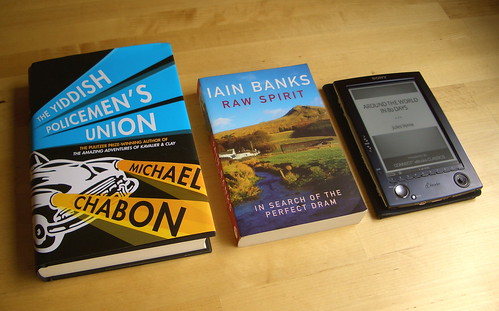
I mentioned this in my review of last year's predictions. It consists of a layer of balls that are white on one side and black on the other. Applying voltage across them cause them to align. Thus you can create images. The displays are bistable - they only consume power when they are changed so once an image has been set it will remain that way even when the batteries run out. At the moment the technology is used for text-based displays. The Motorola F3 is a cheap, long-lasting mobile phone and things like the Sony Reader promise to revolutionise the book. E-paper is much easier to read, appearing like regular paper - it isn't backlit so it doesn't strain your eyes over long periods. The Sony reader allows you to download books and store them on SD cards (you can fit a lot of books into 1 Gb). The device itself is about the same size as a paperback book and you navigate through books by "turning" pages. The technology has an ~1 second response time and the display resets to white before the new page appears. This has put a lot of people off, but it is reported that, just like physically turning a page, you stop noticing it. The device isn't currently available outside of the US, but the idea of this and a little box of SD cards is much more in line with my minimalist life idea. Amazon US recently released the Kindle - a similar kind of device which proved very popular in the US so the interest is there.

The next big thing to happen is flexible E-paper. This uses the same system, but whilst the TFTs that drive the current range of E-paper are based on silicon and therefore inflexible, several companies, including Cambridge's Plastic Logic, have created printable plastic TFTs that allow for flexible devices - a prototype of which is shown below.


I've a more advanced prototype in the flesh and it's very impressive. It is envisioned as being a business tool at first to allow the displaying of email attachments and to receive newspapers via a wireless subscription. The newspapers lost out in a major way to the onset of the internet which they didn't perceive as a threat, so they're not going to make the same mistake with E-paper. Plastic Logic have built an assembly plant in Dresden and the first products are expected to hit the shelves next Christmas so flexible readers could be a big hit in 2009!. The other big development is colour with several companies reporting successful laboratory tests.

Eventually these designs will be scaled up - imagine the giant advertising boards; instead of having a team of workmen to replace the posters one bit at a time, just upload a new image and they automatically update and once updated, they consume no power until they need to be changed again.


Personal GPS


It was a bit of a no-show last year - the technology was there but manufacturers chose to disable the feature. Logic dictates that this is simply so they can enable GPS in the next handsets that will launch in May/June and immediately create desire for the new models. The real driver though will be if the 2nd Apple iphone incorporates GPS (which it almost certainly will) - ever since the iPhone was announced, we've seen a slew of touch screen phones released, but none have matched the iPhone's specs (HVGA resolution and a multitouch screen) so companies are clearly influenced by Apple. At the moment GPS is a high end feature (such as the N95, Tytn II, Touch Cruise) but it will certainly filter down to the mainstream handsets this year and with it we'll see many more GPS-applications such as texting friends your location and navigating using Google maps or simply tagging photos with GPS coordinates. Now a GPS chip costs $1 so there really isn't any excuse.


Splashpower


I've been following this company on and off for several years now but it seems like 2008 could finally be the big year for them. They have developed a way of charging electronic devices by electromagnetic induction. How this works is that you plug a mousepad sized pad into the mains and then simply place items on it to charge - there is no need to plug in anything other than the pad. They claim a power efficiency of >90% and that charging speed is independent of the number of devices on the pad. It certainly sounds appealing as things like remote controls, MP3 players, phones and every other portable battery containing device could be sold without an AC adaptor. No doubt some people will say it's a return to the days when electrical items came without plugs, but it should drop the cost of the items in the first place and smaller, portable pads should be available for travelling - but if it really takes off, then hotels and the like will probably provide pads in-room. It should also help cut down the amount of wasted power attributed to phone chargers left plugged in 24/7. Eventually devices will come with compatible batteries already installed, but until then adaptors will be made available. It's taken the company a long time to get anything to the market and I think it's down to negotiating with companies to make their devices compatible. Splashpower are demonstrating their stuff at CES next week so hopefully we'll finally get a release date for the pads.


Smart cards


I touched on this last year with my prediction that contacless payment cards would take off. That didn't quite prove true unless you live or work in the city of London where the system was fully rolled out. This time around I'm predicting the rise of smart cards in general. Whilst the Oyster card has ensured that smart cards will always have a place in the UK, the rest of the country is so far missing out. This is set to change this year as Oyster-like cards are to be rolled out on the Birmingham transport system - this year for buses and next year for trains - it's a system that makes a massive amount of sense as it will cut fare-dodgers and speed upto the endless queues at New Street at peak times. The first to benefit will be the OAPs - including my parents - who will receive their free buses smart cards this Easter. It'll probably be the first time my parents have ever been at the front of a technology roll-out. In addition to this the wave and pay trials should reach out to the rest of the country by the end of the year. How popular it will be I don't know - it depends on retailer take-up. Of course, anyone applying for a passport will get a form of smart card in the form of the new RFID passports which is in itself a form of smart card. The plastic electronics industry is still trying to get the cost of a printed RFID tag under 1 cent before they start to challenge the old-skool barcode - don't expect that to happen this year.

Also keep an eye out for converging personal devices: The new iPod touch is simply and iPhone without the phone part (it still has the internet facilities) or another way of looking at it is that the iPhone is a slightly lower capacity iPod (16 Gb vs 8 Gb). Expect to see the 2nd gen iPhone sport HSDPA, built in GPS, and 16 Gb flash memory. And a high price. The iPhone hasn't taken off in the UK as we're not used to paying so much for phones - an iPhone costs £900 in all including the contract. The US are used to getting didged for phones so they lapped it up.

Wednesday, January 02, 2008

Results of my futurology predictions

Right so it's been a year since my first go at futurology so let's see how I did...

Digital photo frames


They certainly have increased massively in popularity (if not quality). The main sticking points seem to be non standard aspect ratios (some are 16:9, some are 4:3 some are 3:2) so the pictures require formatting or people will look odd, high power requirements so most will only work from the mains. The prices have come down and it's been possible to get a 7" screen for around £35. They are popping up in more and more places and are appealing to a much broader market than before. Their popularity will only increase and slowly but surely larger versions (upto 12") are making their way onto the market. The next evolution will come with the development of e-ink. With this technology displaying a picture uses no energy - energy is only used to change the picture. There'll be more about this later. Black and white e-ink products are already on the market and colour-displays have been prototyped. I'll have more about e-ink in my predictions for 2008.
Result: partly successful

Contactless payments


The wave and pay system has been rolled out in London, but in a much smaller area than predicted: it is really only useful within the city, but it will be rolled out further over 2008. Travel anywhere on the tube and you will see ads for the Barclay One-pulse credit card that combines wave and pay with an oyster card so this may well become very popular in London this year. For the rest of the country however I'm not sure how long it will take as the banks are only planning to issue 5m cards this year and HSBC in Durham didn't even have any details of any north east trials.
result: predicted too early

HSDPA


A bit hard to tell what to think of this one. Most 3G phones released this year have been HSDPA-enabled. Pretty much all the phones released since May are capable of connecting to the net at 3.6Mbps which is almost as fast as the average UK broadband speeds. The speeds are set to double to 7.2Mbps (and maybe even 14.4Mbps) in 2008 and indeed over the summer most of the UK phone networks began to take mobile data access a lot more seriously. Certainly 3, Vodafone and T-mobile offer USB HSDPA modems for accessing the internet from a laptop anywhere with a mobile phone signal and all the networks have launched "unlimited" data packages to connect to the internet from your phones. The term unlimited varies wildly with 3 being the most generous offering 1Gb of data for £5/month, followed T-mobile offering 1Gb for £12.50/month (The cheaper £7.50 option apparently is fixed at a much slower speed than HSDPA is capable of), O2 allow 200Mb for £7.50/month and Vodafone offer 120Mb for £7.50 whilst Orange bring up the rear demanding £8/month for a paltry 30Mb. So once again, we have the facilities to make a massive jump forward in information access, but only if we're prepared to pay for it. Expect HSDPA routers to become a lot cheaper in 2008 and perhaps higher data allowances.
result: success - but who will pay for it?

Personal GPS


Now I will admit defeat on this one. Sales of in car, stand-alone GPS units must have gone through the roof this year with the big brand, Tomtom, finally breaking under the £100 barrier putting it in the realm of impulse purchase. However, my prediction was about personal GPS ie built into mobile phones. At the moment you get the best from sat-nav if a mobile phone is involved cos the phone can download traffic updates and send them to the main unit via bluetooth which will then seamlessly direct you around traffic jams. I can see the bigger companies like Tomtom integrating a sim card into new in car units and do this without the need for a phone or data charges (much like the Amazon Kindle reader does with books). But back to my prediction that most mobile phones would have GPS in them by the end of the year. It was looking good, the N95 launched with GPS and even a lower end Nokia 6110 had GPS. All the new HTC phones were run my the Qualcomm 7200 chip that includes, among other things, built in GPS and wifi. Sure enough all the new phones (Tytn II, Touch Dual and S730) were shown with fully functioning GPS and wifi, but for some reason the final devices lacked GPS (Touch Dual and S730) and wifi (Touch Dual). The phones good switch these functions on, but HTC had removed the antennae making the features useless. This seems a bit odd as it would increase the appeal of the phones. Furthermore the follow up to the very successful K800i, the K850i - widely rumoured to have GPS - was released GPS-less. The cynical would say that the GPS features were only disabled to provide the ability to release "upgraded" models in 6 months. The years big release, the iPhone was also GPS-less so this perhaps took the pressure off other manufacturers. I'll extend this prediction to next year.
result: failed due to lazy companies

Wii


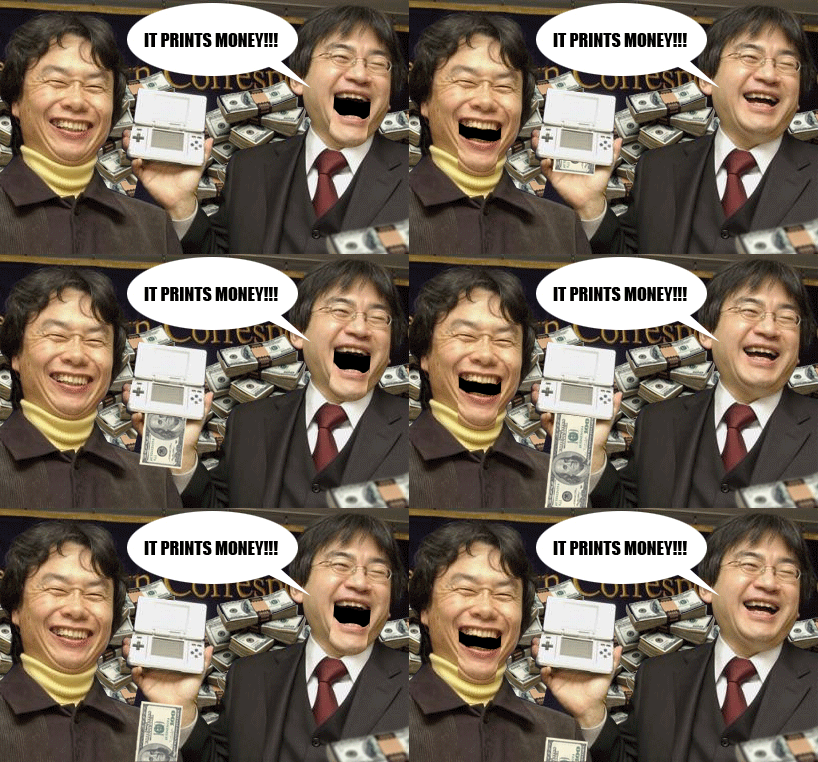
Here's the unmitigated success of my predictions. It wasn't easy to find a Wii after Christmas. I kept missing stock refreshes online and most batches sold out within minutes. I finally got my Wii in late January and it was fantastic. The demand kept up and Wiis were hard to come by until the summer and suer enough once Christmas rolled around again they were once again nowhere to be found. It's not just the UK, in the week before Christmas 1.5 million Wiis were sold around the world - that's 1.5 million in a week. The only thing more popular was the DS lite which sold over 2 million in a week. By comparison the PS3 sold around 600K and the PSP sold 725K. Take that Sony. It seems the combination of a low (well-ish) price and broad appeal have hit a nerve. I heard stories of people's parents buying Wiis and having Wii parties with their friends. While there was a dearth of party games, Paper Mario, Resident Evil 4, Metroid Prime 3 and the sublime Super Mario Galaxy ensured it catered to the gamers too. As the bloggers favoured animated Gif below says - these Nintendo consoles are printing money (just as the PS3 eats it). Even though they're slightly creepy, they crack me up every time I see them.


The next year starts off with the release of Wii fit, complete with balance board, that Nintendo can use to cash in on the whole after Christmas exercise fad so expect the console sales to keep on accelerating away from the competition.


result: definitely a success.

I'll post my predictions for 2008 in the next couple of days.

Tuesday, January 01, 2008

Updates are coming

I know it's been over four months since my last update here, but I've been being sociable and haven't had the internet at home so updates have been dificult. They are coming in the next few days. In the mean time I wish everyone a happy New Year and all the best for 2008. I've also updated 4 months worth of photos to my Flickr account so click the link on the right to see them.

Monday, August 13, 2007

Rainbow

After most of June and July being a complete washout, the weather seems to be showing some signs of getting around to summer. This means that most showers are followed by bright sunshine - Emma and I spotted this while walking down South Street a few weeks ago.

Rainbow 002

Graduation and alumni weekend - a double header

The 29th June 2007 marked my second Durham graduation. I've written about how the first was a big let-down, so this time I wasn't expecting as much but it turned out really well. I met my parents in town and we went to Oldfields for lunch which was really nice - the food was great and we were there at the same time as Matt and his entourage and Nick from Engineering.

graduation 005 graduation 006 graduation 010

After that Matt and I walked over to Palace Green to gown up. For some reason they had a multitude of PhD gowns there, but only a select few sizes of hat - this resulted in Matt and I having hats that shifted around a lot over the afternoon. We filed over to the Castle where we met up with the other graduands - along with the other PhD and undergraduate chemists we were also paired with historians. The PhD chemists were split between those from my year who had managed to get submitted in time and those left over from the year before. This included Carl and Lue so there was a total of 4 Trevs' chemists getting their PhDs.

graduation 015 graduation 021

After we were paraded across to the cathedral we were seated in the EXTREMELY narrow seats. They were connected together but clearly weren't meant to be used by adults when in this configuration. With us all rammed in the temperature started to go up dramatically and the gowns and hats didn't help at all. As the ceremony started the historians were called up first. Once again it was quite fun to watch the different techniques used to shake Bill Bryson's hand. Some people looked embarrassed to be there and tried to get off the stage as quickly as possible without looking Bill in the face, others sneaked in the two-hand shake. As our cramped conditions became almost unbearable the historians seemed to keep on coming. Finally they were finished and attention turned to the chemists. Once again as we got ever-closer to the front of the queue the nerves began to appear - were our hats on straight (a new problem since the first graduation), how many steps were there and could we navigate them without falling over and most importantly of all you had to go up at the right moment
and hope they pronounced your name right. right. There were no major foul-ups and when we got back to the seats I decided to leave a spare seat to alleviate the cramped conditions. This seemed to throw a lot of people off as they weren't sat where they had been before. Bill Bryson gave his speech, which although funny was pretty short and apparently an almost word-for-word repeat of his speeches from previous years.

graduation 023 graduation 029 graduation 031

After we got out of the cathedral we all managed to stay in roughly the same place so we got in a lot of group photos and then we tracked down Bill Bryson and got our picture taken with him. We bumped in Maggie and our college tutor John which was nice and a lot of our chemistry friends turned up to see us. All in all it was a lot better than the chaos of 2003.

graduation 033 graduation 037

After this we bundled off the parents and handed back the gowns (our graduation was the last of the week so we couldn't wander around town in the gowns) and headed over to the New Inn. This day also marked the start of Trevs' alumni weekend so the New Inn slowly started filling up with familiar face from recent years. Eventually we dragged ourselves up the hill and into the bar. We got chatting to various people and after a few hours went out to experience Love Shack for the first time - it was pretty rammed and we didn't get back until about 3am. The next day brought the relief of brunch and then a free day until the formal. Alumni weekend is all about the drinking these days - the only events are the buffet in the bar on the Friday and the formal/late license on the Saturday. We turned up to the drinks reception and found a surprisingly large number of 1999 matriculants there.

alumni 005 alumni 004 alumni 011

We had a really good formal chatting to those around us at the table. Afterwards we slipped back into our old formal routine of mingling and chatting to people, dancing round the bar and ending up on the cobbles chatting to even more people. We had an amazing night and the best part was that although I had looked forward to seeing certain people - Matt, Mel, Alan, Brett and Sarah etc. it was really fun chatting to all those people that Matt and I used to chat to in the bar and formals like Gareth and Fran. It was really good to catch up with all those people that I will probably only hear from very rarely.

alumni 014 alumni 017

The next day, absolutely everyone I saw looked like death warmed up. Which was amusing. All in all the weekend was absolutely amazing and the only bad point was that it had to end. Roll on next year (although no more graduations for me now.)

The working world

So it's been what - 9 weeks? I've been living the working life back up in Durham. For the first month I stayed with my former housemate Ollie in deepest darkest Gilesgate. Amazingly, following 5 years of being lazy (getting up-wise anyway) dragging myself up at 7.20am every morning hasn't been too bad. My journey to work only took 20 minutes, but half of that was simply getting from Gilesgate to the New Inn - from there it's fine. Straight away I joined up with my prospective housemates Emma and Barry to find some more permanent accommodation. We took in new town houses (all with problems despite being new). In the end we found a flat in the brand new apartments on South Street where the old city library used to be. For £66/week it's ours for 6 months - completely furnished (and we are taking plush here - LCD tv, dishwasher new beds and bedding). Sure enough there are some issues (no shower and the dishwasher has "issues") and the landlords are pretty slow but there haven't been any real problems yet. Parking is an issue, but my journey to work has been reduced to 15 minutes including a walk up the hill to my car.

The job. Well I'm sure it hits everybody when they first start a new job - I spent the first day thinking how much I hated it and how I was going to quit and go back to trying to get a lab-based job. Of course, these thoughts have just about passed and I now see it as a tremendous opportunity. To bring people who don't know up to speed, I'm working for Thorn Lighting (one of the UK and Europe's biggest lighting firms) in a small team (just 3 people!) alongside teams from Durham university (including my PhD supervisor) and Sumation from Cambridge/Japan to work out a path to bringing out a commercial white-light OLED. There's plenty of competition - in Europe there's Philips and Osram, in the US there's UDC, Eastman-Kodak and GE and in the Far East Konica-Minolta.

I'm starting to understand several things about how the real world works. Firstly it's absolutely full of people over-exaggerating everything. The reason for this is simple - money. If you are trying to get money out of someone for your project they are more likely to give it to you if you play up what your work could lead to. At the moment the in-thing in research grant applications is climate change - simply find a way of getting that phrase into a research proposal and people will fall over themselves to give you cash. In our case, apparently our team has "a substantial number of chemists and physicists" working on it - in reality we've got 2 and a half chemists and 3 physicists. Likewise when it comes to reporting results everyone will be very selectve about what they report - for example konica-minolta have reported a white-OLED with a luminous efficiency of 64 lm/W which is very good, but there is no mention of the lifetimes which leads us to believe that it simply dies after a few hours - not the most useful thing ever then. Our main European rivals, the Olla project, have showcased 15cm squared tiles of light, but on closer inspection you can tell it's made up from smaller panels.

Secondly, it's not what you know - it's who you know. A lot of our job seems to be networking with other people in the industry and keeping our fingers in various pies. It almost seems like our future careers depend on it. Our project has a budget of £3.3 million over 3 years, but other projects in the US and Europe are having millions poured into them fairly regularly. It seems fairly clear that our parent company, Zumtobel, isn't particularly interested in taking this project further than the initial 3 years. My guess is they'll listen to our report, but with new production plants costing over £10m they'll simply buy in products from other companies and our team will be cut loose. My aim is to move on to the company I originally wanted to work for: CDT/Sumation. Sumation is the name for the chemistry wing that is a joint venture between CDT and the Sumitumo chemical company of Japan. In fact, just a few weeks ago Sumitomo acquired the rest of CDT for $285m. The position of senior chemist seems like it would be ideal for me - input into the chemistry on all Sumations projects, the prospect of travelling to Japan for work exchanges and meetings, worldwide travel to various conferences and trade shows and being very visible in the OLED community that is becoming more important every year.

One of the benefits of having worked in Durham for so long is that I can see through all the BS we're being fed. The trouble we've got is that Sumation are banging out new materials at a rate of knots but they refuse to tell us what they are (and as a chemist that is really frustrating) where as Durham aren't quite as quick. Having worked alongside them for the last 4 years I know when they are taking us for a ride. I get the feeling there is a lot of sitting around going on. Academia simply wants to get in money and do the work they want to do and it's partially our job to make them do what we want them to do. Thankfully since they are so close to us we can easily keep an eye on them. It's sad that I've realised this as I used to think that industry was unreasonably demanding but it turns out that academia is fairly unfocussed. It means I can't look at academic research the same as before - sort of like how Christmas changes when you "know" about Father Christmas.

Moments of excitement so far: getting my corporate credit card (haha!), the team meetings (especially the meals out - the last one was at Bistro21), going anywhere in my boss' car (a beefy Volvo S80 that he frequently rags - 80mph in 3rd gear anyone?) and our trip over to Manchester in the company Zafirer - a naughty 1.9 turbo diesel estate that loves to cruise at 90...

So 9 weeks in and 50% of the time I'm really excited about the possibilities this job may lead to (both for the technology/science and my own career) and 50% of the time I'm bored cos we've don't have so much to do at the moment (hence these updates). I'll report more in due course. In the mean time, here's a partial team photo.


L-R Igor (Durham chemist), Tom (Sumation chemist), Torsten (Sumation chemist), Andy (Durham physics supervisor), Ben (Durham physicist just back from Singapore), me, Fernando (Durham physicist), Olivier (Thorn physicist) and Geoff (Thorn supervisor).